TMS Beyond GPS: Dispatch, Documents, and Plant Windows
GPS alone is not a transport management system. The platform must support dispatch, documentation, plant windows, and commercial LCV work, not only a map pin.
01
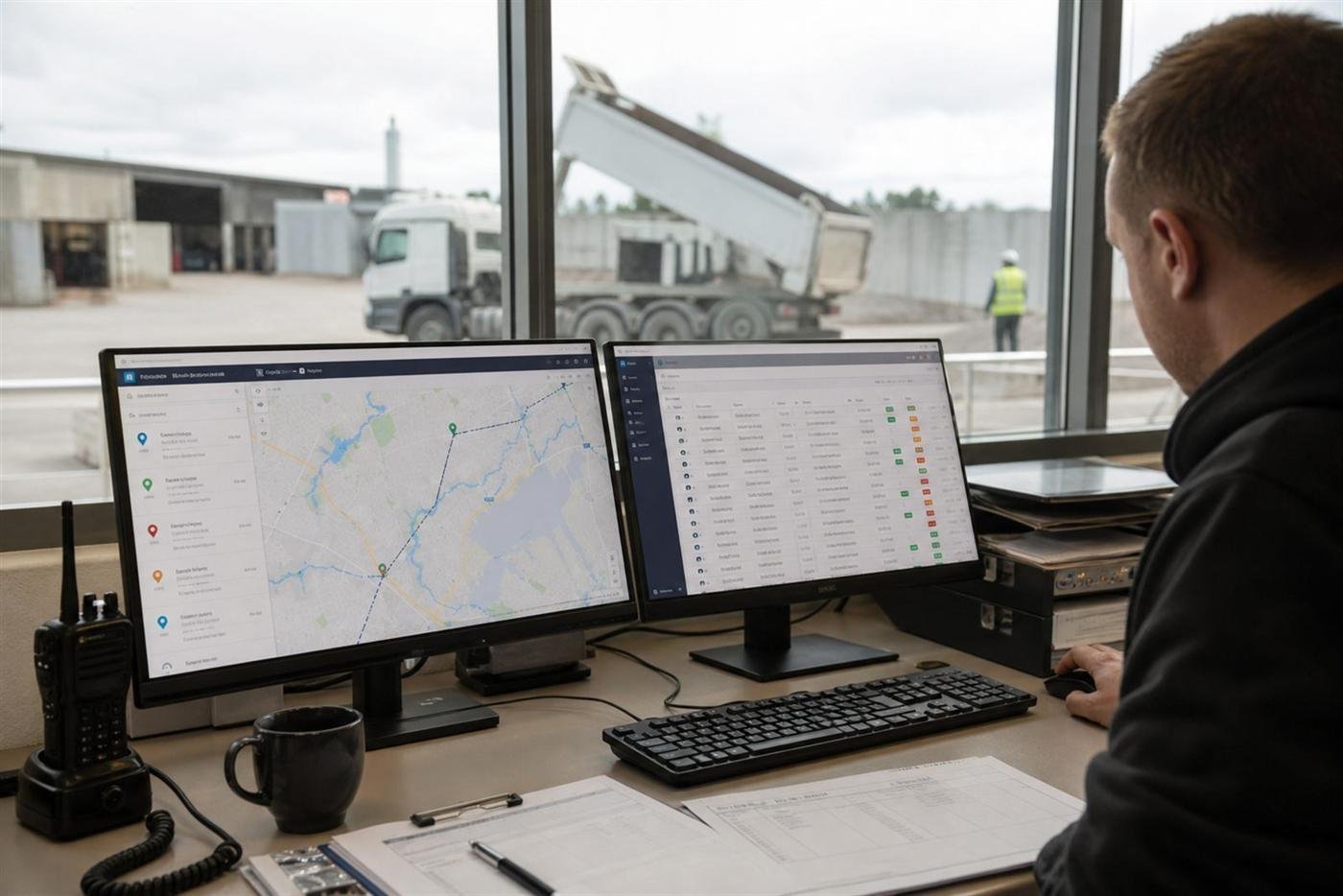
GPS alone is not enough on real corridors
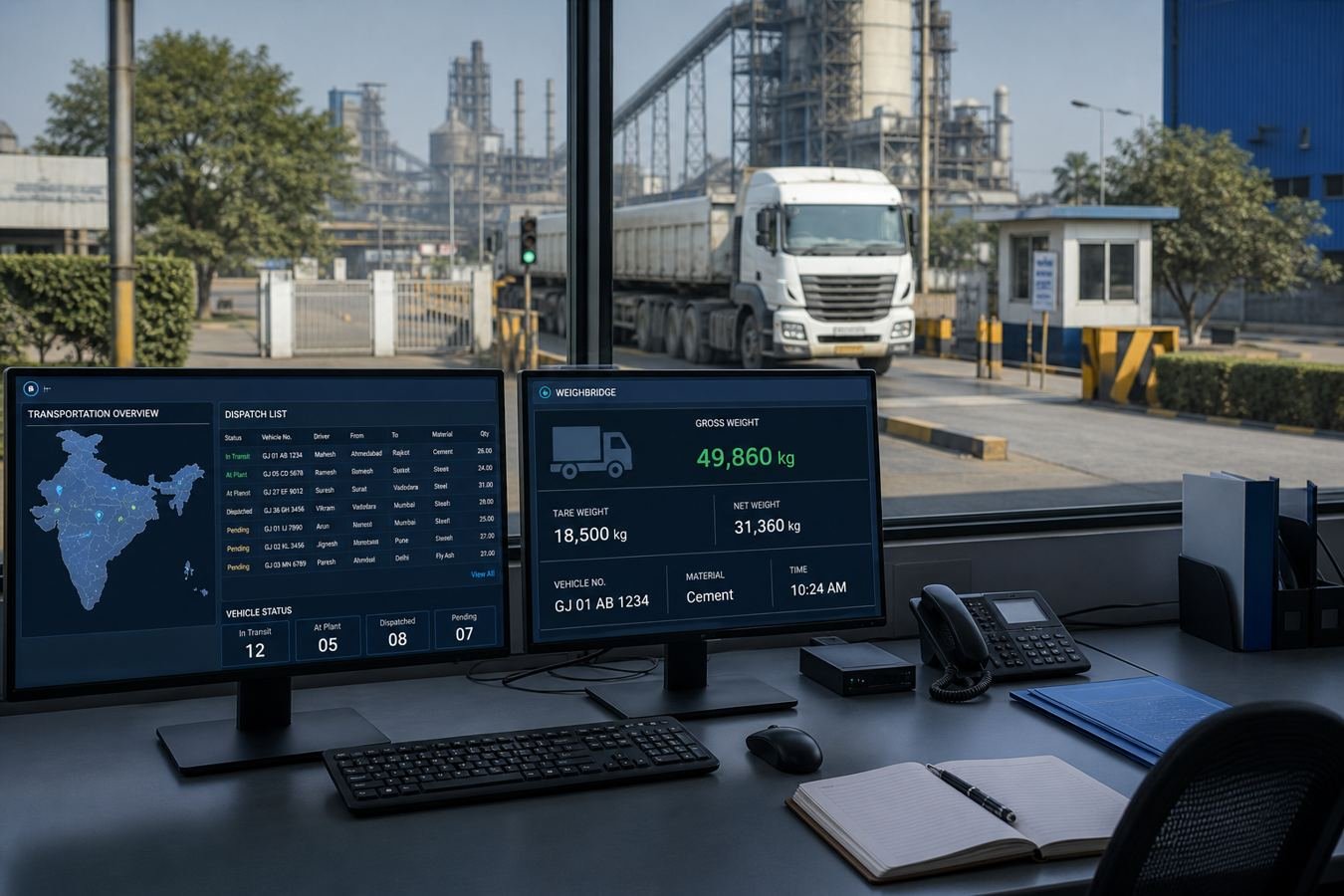
A lot of teams buy tracking and assume they have digitised transport. On cement, steel, mining, and DC lanes, location is only part of the job. The hard bits are loading windows, weighbridge loops, document handovers, axle-aware assignment, and exception communication.
When those steps live in WhatsApp and spreadsheets, GPS becomes one more screen to check. It isn't a system of record.
A pin answers "where is the truck?" A TMS should help answer:
- Which trip is this vehicle on, and what's the next milestone?
- Was the right asset type assigned?
- Are documents complete against this trip?
- What changed, who was told, what's the new ETA?
- Can the shipper see status without calling dispatch?
02
What a working TMS should connect
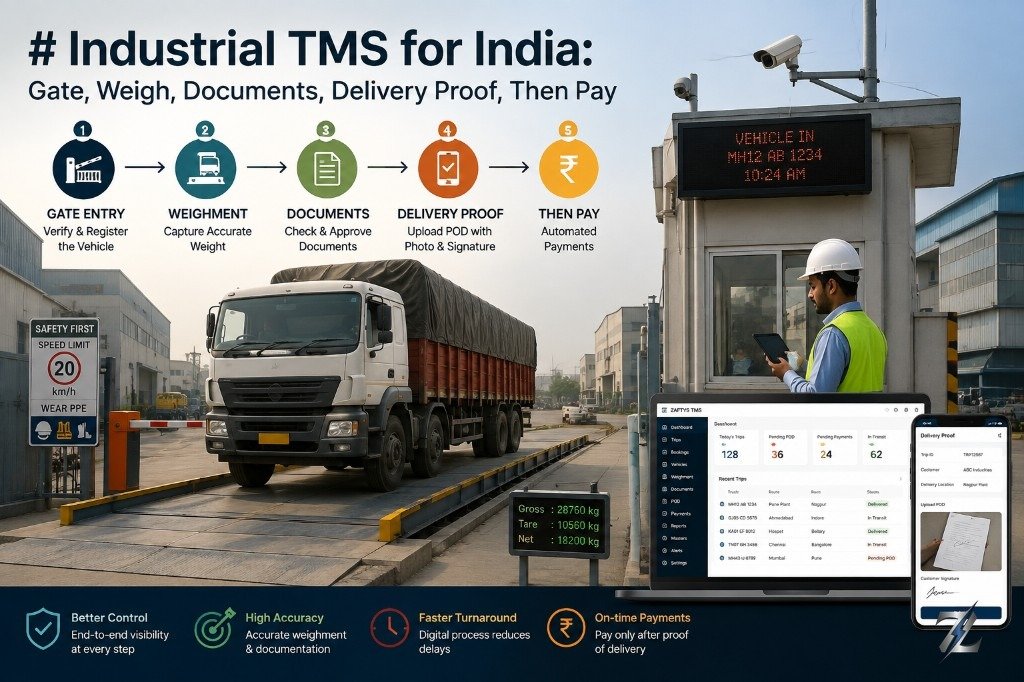
Useful platforms tie planning to execution on one trip lifecycle:
Reporting should show lane cost and exceptions, not only last location. Industry pieces on empty returns also keep linking visibility to utilisation (for example TapTap on empty return trips); the point is the same: status has to be usable for decisions.
- Dispatch and assignment matched to asset type and corridor (tipper vs flatbed vs tanker matters).
- Structured status from assignment through loading, transit, delivery, and close-out.
- Digital documentation: LR, ePOD, invoices stored against the trip.
- Fleet and driver readiness: documents, expiry, fitness signals.
- Client portal access so shippers aren't calling for every ETA.
- Exception handling that leaves an audit trail, not only a chat scroll.
03
Plant windows and multi-axle reality
Generic last-mile tools often assume simple pickups and urban stops. Commercial freight needs room for:
ZAFTYS TMS was shaped by those conditions. We run it on our own fleet daily. Extra trucks can be posted or found on TranZfort, with the trip still visible in TMS when we run it (also summarised on TranZfort marketplace).
- Plant queues and slot discipline (cement loading windows)
- Mill securement and weighbridge loops (steel coil basics)
- Axle limits and permit-aware routing
- Surge capacity when you post on TranZfort instead of adding random vendors
04
How TMS supports empty-mile and planning goals
Backhaul decisions need timely status (empty return trips). Shipment planning needs a shared cargo and window brief (planning industrial shipments). Technology doesn't replace planning. It makes planned work executable and measurable.
05
How to evaluate before you buy
Ask vendors to walk a real commercial trip in the demo:
If the demo only shows a map pin moving, keep looking.
Also ask:
Prefer platforms used in live ops, not only slide decks.
- Plant or mill load with window constraints
- Weighbridge / documentation step
- Transit exception (delay, diversion, detention)
- Delivery and ePOD
- Shipper visibility without calling the control room
- Who runs this platform on live transport operations today?
- How are LCV, multi-axle, and tipper programs modelled?
- Where do LR and e-POD live relative to the trip?
- How does a TranZfort load appear in the same operational picture?
06
Shipper portal vs operator workspace
Be clear who the TMS is for:
If a product only serves one role well, say so early. Mismatched expectations create the familiar "we bought a tracker" disappointment.
- Shippers need shipment status, documents, and exception clarity without calling the control room for every load.
- Fleet operators need dispatch assignment, vehicle/driver readiness, and trip close-out across their assets.
- Hybrid companies like ZAFTYS need both views, plus a way to bring a TranZfort trip into the same picture when we contract it.
07
What slows teams down after go-live
Even a capable TMS fails when:
Technology amplifies process. Weak process becomes faster chaos. Pair TMS adoption with the habits in industrial shipment planning.
- Milestones are optional and chat stays the source of truth
- Documents get uploaded days after delivery
- Plant/mill window data never enters the trip record
- TranZfort partners are onboarded without process standards
08
Audit trails (the unglamorous part that matters)
Shippers increasingly ask who changed an ETA, who approved a diversion, and whether proof of delivery matches the trip. Chat-based ops rarely answer that cleanly months later in a claim or audit.
A TMS should leave a durable trail: assignment, status changes, document attachments, portal views, all on the same trip ID. That isn't bureaucracy for sport. It's how disputes shrink and how you improve over time.
09
What ZAFTYS offers
ZAFTYS TMS is live for dispatch, fleet, documentation, and customer visibility. We run it every day and offer the same operational discipline to shippers and operators at app.zaftys.com.
Shippers using ZAFTYS logistics get portal visibility. Fleet operators can adopt the platform for their own ops. When you need a truck we do not have that day, post on TranZfort. See also services.
10
How shippers and operators should split ownership
A TMS project fails when nobody owns data quality. A workable split:
If chat remains the default for every update, the platform becomes a report writer after the fact. Train the habit: status first in the system, then message only when a human decision is needed.
- Dispatch owns assignment quality and milestone honesty.
- Yard / plant liaison owns window and weighbridge truth in the record.
- Accounts / billing owns document completeness against the trip.
- Shipper stakeholders own reading the portal before calling the control room for routine ETAs.
11
What to do next
Explore ZAFTYS TMS on the TMS page, log in to the portal, or ask for a guided demo that walks a real trip. Not only a tracking screen.
12
References
Outside links below are for grounding and further reading. They are not endorsements of those vendors' products.
Frequently asked questions
Is GPS tracking the same as a TMS?
No. Tracking shows where a vehicle is. A TMS connects planning, assignment, trip status, documentation, and client visibility.
What should operators look for in a TMS?
Dispatch that handles LCV drops, multi-axle, and tipper programs, e-POD and LR records, fleet readiness signals, and reporting that reflects exceptions, not only last location.
Can shippers use ZAFTYS TMS without running their own fleet?
Yes. Shippers using ZAFTYS logistics get portal visibility. Operators can adopt the same platform at app.zaftys.com.
Will a TMS eliminate detention and empty miles?
No tool eliminates physical plant queues or one-way demand. A TMS makes those problems measurable and easier to manage with disciplined planning.