TMS Evaluation Guide for Indian Manufacturers: How to Choose the Right Transportation System in 2026
Most global transportation management systems are built for Western parcel or LTL networks. Indian manufacturers run heavy FTL, multi-axle trailers, spot brokers, weighbridges, and gate queues. This TMS evaluation guide covers the landscape, five pillars, a 25-point demo scorecard, and a six-week rollout. Score vendors on those jobs, not on a map with moving dots.
01
How to use this guide
This is a buying guide for supply chain directors, plant heads, procurement chiefs, and finance directors at Indian manufacturing companies. Use it when you need to choose a TMS (transport management system) for Indian plant logistics. Score what the product does at the gate, the weighbridge, and the GST portal. It is not a licence brochure.
The core problem is simple. Most global enterprise TMS products were designed for Western parcel or less-than-truckload networks. When you drop them into an Indian manufacturing plant that lives on heavy full truckload (FTL), multi-axle trailers, spot brokers, weighbridges, and gate queues, field staff stop using them. The map looks busy. The register at the cabin is still the system of record.
NITI Aayog and RMI work on Indian freight is worth reading before you write an RFP. Road still carries the large majority of domestic goods movement, on the order of 70 percent of a multi-billion-tonne freight task. A large share of that movement is still coordinated on phone calls, WhatsApp groups, and Excel. The cost of that informality shows up as plant detention, unverified freight bills, lost physical lorry receipts, and e-Way Bill expiry fines.
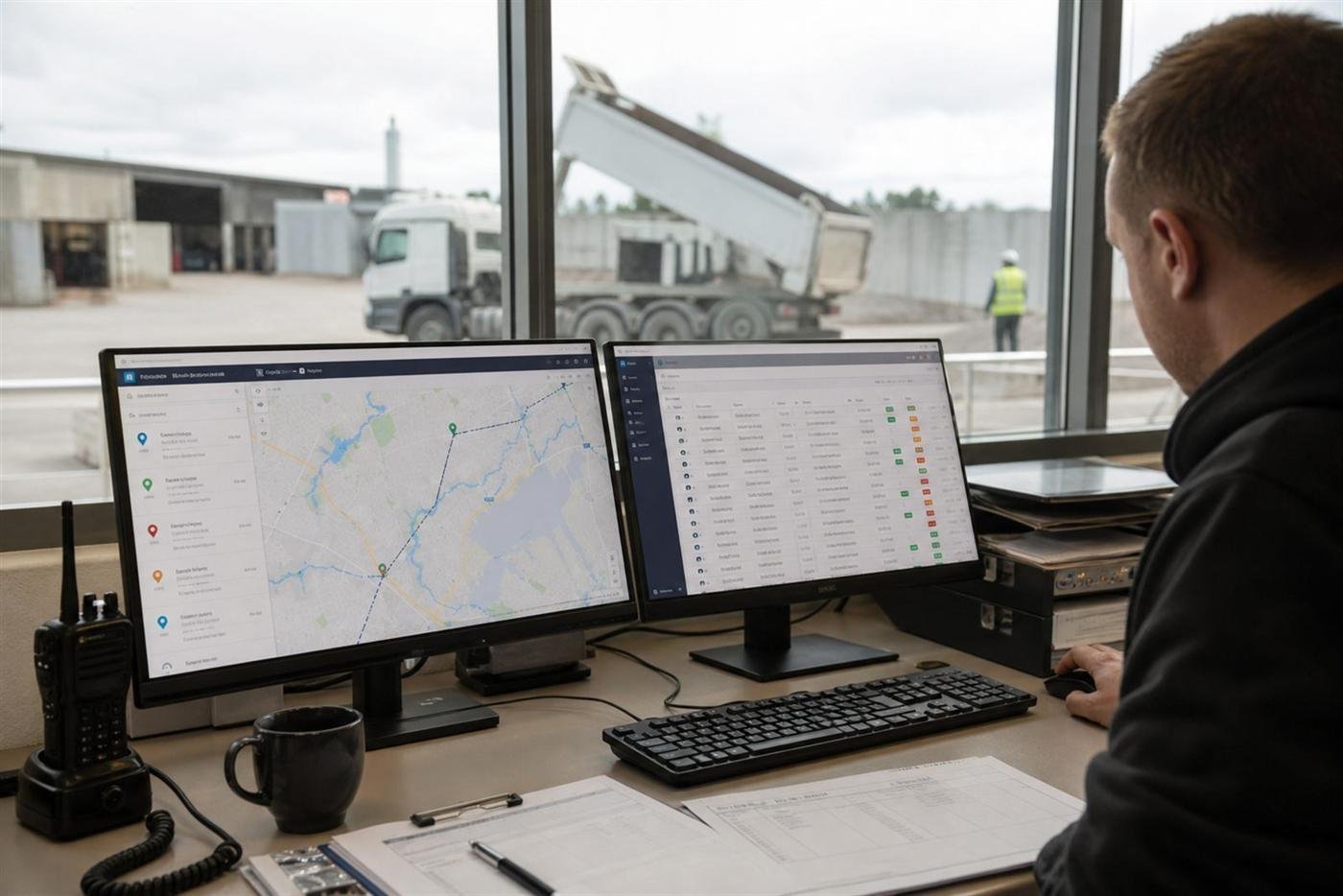
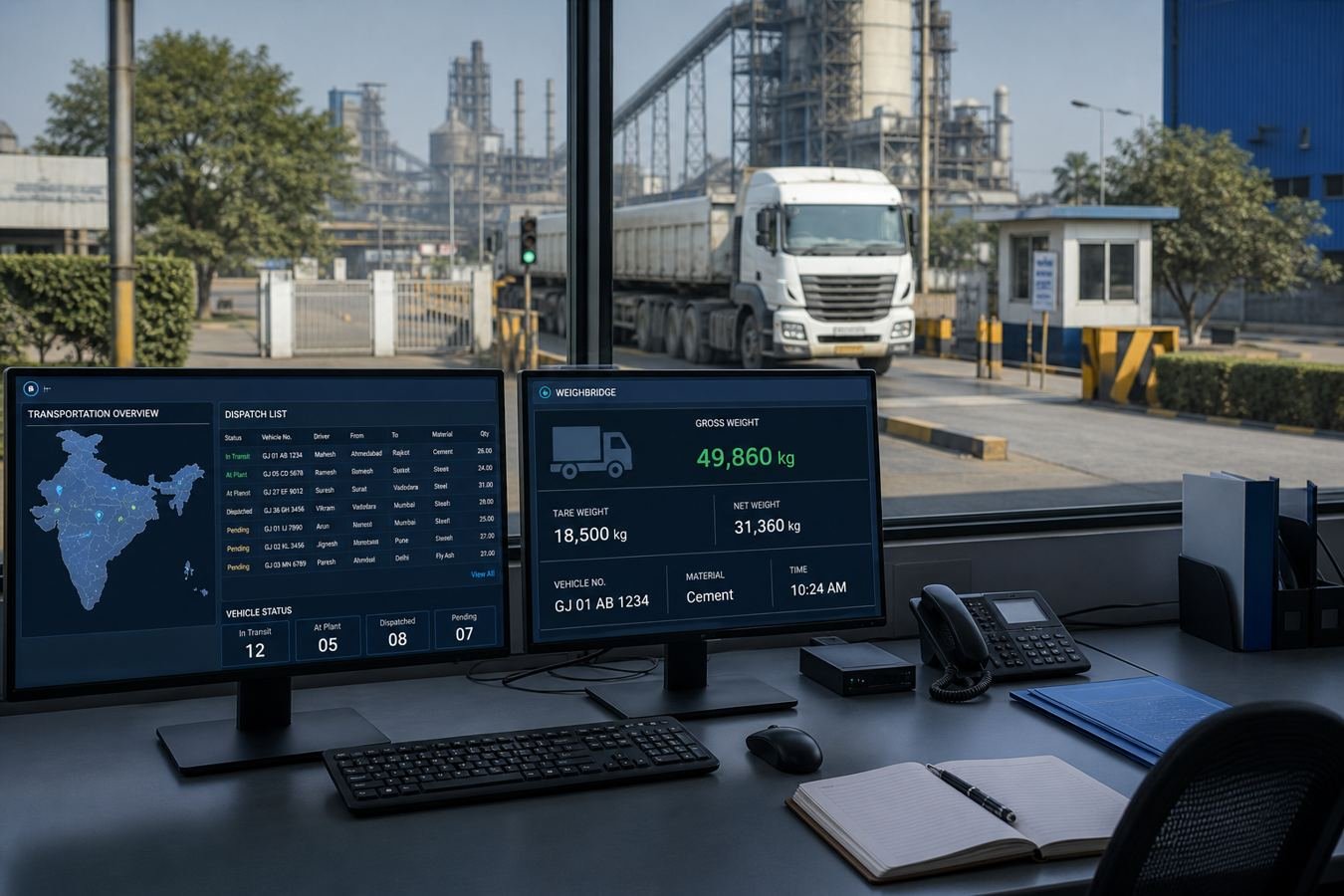
A TMS that fits Indian manufacturing is not a map with moving dots. It has to unify tracking that works on company GPS and on broker trucks, stage-level yard times, weighbridge integration, multi-axle payload rules, and electronic proof of delivery in one operational view. The rest of this article is how to test that, in order.
- Road · 70%
- Other modes (rail, water, air) · 30%
Order of magnitude. Source: NITI Aayog and RMI, Fast Tracking Freight in India (June 2021). Not a ZAFTYS operating KPI. Other modes are grouped; read the original before a board pack.
02
The in-plant and highway reality
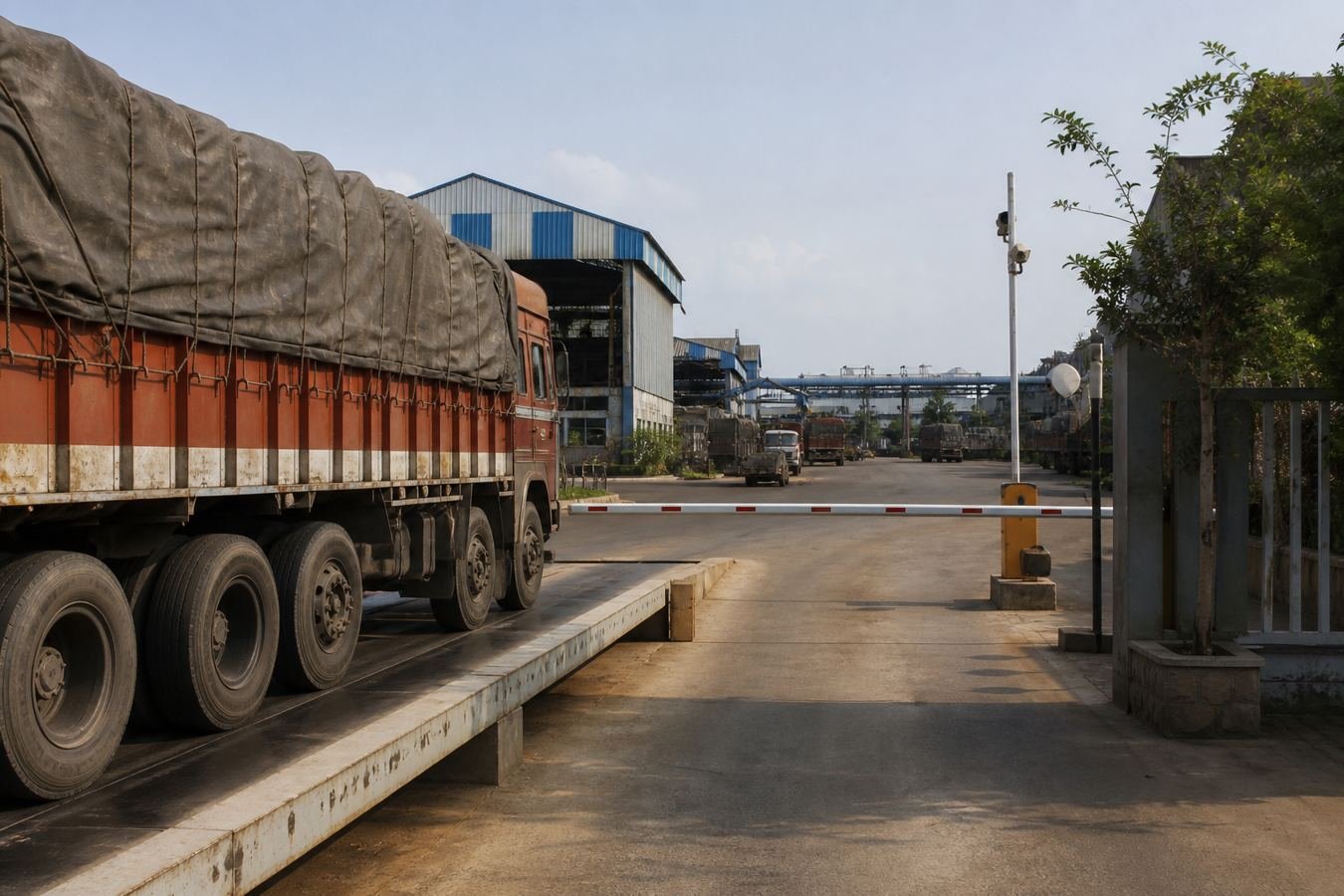
Walk the gate of a steel rolling mill in Chhattisgarh, a cement grinding unit in Rajasthan, a chemical complex in Gujarat, or an FMCG hub near Chakan or Bhiwandi. The picture repeats. A line of 16-wheeler and 18-wheeler trailers sits on the state highway. Drivers sleep in cabs waiting for loading slips. Security scribbles vehicle numbers into a paper register. Dispatch clerks drown in physical LRs.
You can spend crores on SAP or Oracle inside the four walls and still lose the shipment the moment finished goods leave the warehouse bay. ERP knows the sales order. The highway does not. That gap is the TMS job, and it starts before the truck is even allowed through the barrier.
Without a working plant TMS, the unmanaged bottleneck is a chain. Trucks queue on the road and generate detention. Manual security logs sit on paper. Gross and tare weigh wait in a second queue, with a real tamper risk if a clerk can type a number. Delayed paper L₹and physical PODs then start the finance fight weeks later. None of that is a 'visibility' problem. It is a stage problem.
03
What informal coordination actually costs
When logistics teams run daily FTL on phone and WhatsApp, four expensive failures show up again and again. They are not software bugs. They are process holes a TMS either closes or ignores.
Uncontrolled plant detention: drivers arrive unannounced, fill the bays in the peak window, and leave the same bays idle at night. Unplanned queueing becomes a detention claim from the transporter. You pay for hours that never produced a loaded truck. Timed slots and a gate that can refuse an early arrival are operational, not decorative.
Spot vehicle visibility blackout: NITI Aayog's Transforming Trucking in India work is widely cited for the structure of the market. A large majority of freight capacity sits with small owner-operators, many with fewer than five goods vehicles. When internal fleet is full and you hire through a local broker, the hardwired GPS box you specified in the IT RFP is not on that truck. If the TMS cannot see that vehicle, your control tower is a dedicated-fleet toy.
Working capital locked in paper PODs: transporters mail physical L₹to head office on a monthly cycle. One missing stamp or a lost sheet can halt customer invoicing for 45 to 60 days. That is not a courier problem. It is a proof-of-delivery design problem.
e-Way Bill expiry fines: highway checking posts do impound cargo when validity lapses. Dispatch that cannot see remaining distance and time against the GST portal window will miss the extension. A TMS that cannot alert on e-Way Bill clock is not ready for India, no matter how pretty the North American lane board looks.
01
Uncontrolled detention
Unannounced arrivals fill peak bays and leave nights idle. You pay hours that never loaded a truck.
02
Spot visibility blackout
Overflow broker trucks rarely carry the GPS box in the IT RFP. If the TMS cannot see them, the tower is a dedicated-fleet toy.
03
Paper POD lock-up
Physical LRs on a monthly mail cycle. One missing stamp can halt invoicing for 45 to 60 days.
04
e-Way Bill expiry
Checking posts impound cargo when validity lapses. A pretty North American lane board will not extend the GST window.
Operational pattern from the article. Not a rupee loss model.
04
Why generic global TMS products fail at Indian plants
Enterprise IT shortlists are often built from Western analyst reports. Those platforms can be excellent at parcel sortation, rail, and intermodal containers. They still fail adoption in Indian industrial yards for structural reasons, not because your team is 'change resistant.'
The comparison you should put on one slide is blunt. Generic Western TMS: parcel, rail, and LTL; assumes 100 percent installed GPS; treats the plant as one geofence pin; international duty modules; 9 to 12 month implementations. India-specific industrial TMS: heavy FTL; GPS plus FASTag plus driver SIM; gate, weighbridge, bay, and e-POD as stages; native e-Way Bill, FASTag, and GST LR; a pilot you can finish in weeks with clerks in the room.
The hardware fallacy is the first trap. Western products assume every commercial truck has an active, hardwired GPS unit on a fixed protocol. CRISIL and NITI Aayog research is used across the industry to show that a large share of fleet capacity sits with small and medium operators. You will not install a telematics box on every spot vehicle that shows up for a two-day surge. If the vendor's architecture cannot live without that box, the project dies the first peak week.
The second trap is ignoring the in-plant yard. Foreign platforms spend their energy on highway transit. A 100-acre plant is a single dot. They cannot timestamp gate entry, gross weigh, loading bay, tare weigh, document issue, and gate exit. Those stages are where TAT is won or lost. If total plant time jumps from two hours to six, you need to know whether the delay sat at security, the weighbridge, or the bay. A highway map cannot tell you.
The third trap is regulatory hooks treated as 'phase two APIs.' FASTag sits on the NPCI network. e-Way Bill and e-invoice sit on GST systems. If the vendor says they will build the bridge after go-live, price a systems integrator, not a module. Native hooks are a requirement, not a nice-to-have.
Cargo mix
Generic Western TMS
Parcel, rail, LTL, intermodal containersIndia-specific industrial TMS
Heavy FTL, multi-axle trailers, spot brokersTracking assumption
Generic Western TMS
Nearly 100 percent installed GPSIndia-specific industrial TMS
GPS plus FASTag plus driver SIM consentPlant model
Generic Western TMS
One geofence pinIndia-specific industrial TMS
Gate, weighbridge, bay, e-POD as stagesRegulatory hooks
Generic Western TMS
International duty modules; India as phase-two APIsIndia-specific industrial TMS
Native e-Way Bill, FASTag, GST LRTime to a live plant
Generic Western TMS
9 to 12 month implementationsIndia-specific industrial TMS
Pilot in weeks with clerks in the roomEvaluation frame for Indian industrial FTL. Not a ranked vendor score.
05
Pillar 1: Tri-hybrid tracking (GPS, FASTag, SIM)
A practical TMS for Indian highways cannot rely on a single tracking technology. It must combine three streams based on who owns the truck, and show them on one dashboard so dispatch is not flipping between three apps.
Hardwired GPS telematics belongs on company-owned and long-term dedicated contract fleets. That is where you can demand 30-second pings, fuel monitoring, and route compliance. It is also where you have leverage to keep the box powered and honest.
FASTag toll plaza integration is the checkpoint the driver cannot switch off. India has well over 1,400 national and state plazas. When a truck passes a plaza, you get an immutable location event. Ask in the demo whether the vendor reads NPCI or IHMCL feeds, not whether they can screenshot a toll SMS. FASTag will not give you a smooth breadcrumb on a village road. It will tell you the truck is still on the legal corridor.
Consent-based SIM triangulation is how you cover spot market trucks in a demand spike. The platform sends one SMS or WhatsApp consent to the driver's phone. After approval, location comes from the cellular network. No extra app download. No hardware install. If the vendor cannot show this live with a number you provide in the room, you will go dark on overflow. Put GPS, FASTag, and SIM on one operational screen. Split screens are how trucks disappear.
- 01
Hardwired GPS
Company-owned and long-term dedicated fleets. 30-second pings, fuel, route compliance.
- 02
FASTag plazas
Immutable corridor checkpoints the driver cannot switch off. Ask for NPCI or IHMCL feeds.
- 03
SIM consent
Spot trucks in a demand spike. SMS or WhatsApp consent, then cellular location. No extra box.
- 04
One dashboard
Dispatch does not flip between three apps. Split screens are how trucks disappear.
Framework for who owns the truck. Not a measured mix of trips. Do not treat the three nodes as 33 percent shares.
06
Pillar 2: Yard stages and plant TAT
Reducing plant turnaround time is one of the few freight-cost levers the plant actually controls. When trucks move in and out cleanly, transporters offer better lane rates because drivers spend less time idling. Your TMS must timestamp five milestones, not a single 'vehicle on site' flag.
Milestone 1 is gate arrival and verification. Automated check-in via FASTag reader or QR should confirm driver identity, registration, and e-Way Bill status before the barrier opens. A register that the guard fills after the truck is already inside is theatre.
Milestone 2 is the first weighbridge pass, the tare. Empty weight should come from the indicator over a digital serial or IP link. Manual typing is how numbers get rounded, forgotten, or 'adjusted.'
Milestone 3 is loading bay allocation. The system should send the driver to a bay or silo from a queue rule, not from whoever shouts loudest. Congestion at one door while another sits empty is a dispatch failure, not a driver failure.
Milestone 4 is the second weighbridge pass, the gross. Capture loaded weight, check net against purchase-order tolerance, and check overall load against GVW. Milestone 5 is documentation and gate exit: digital LR and gate pass only after weight and papers clear. If TAT blows out, these five stamps tell you where. A single geofence dwell time does not. For the plant detention and yard walk behind this pillar, see cutting plant detention and TAT.
- 01
Gate
FASTag or QR check-in before the barrier. Identity, RC, e-Way Bill.
- 02
Tare
Empty weight from the indicator over serial or IP. No typed numbers.
- 03
Bay
Queue rule to a door or silo. Not whoever shouts loudest.
- 04
Gross
Loaded weight vs PO tolerance and GVW.
- 05
Exit
Digital LR and gate pass only after weight and papers clear.
Plant TAT stages used in the demo scorecard. A highway map cannot split these delays.
07
Pillar 3: Multi-axle payload and weighbridge lock
Industrial cargoes such as steel coils, raw minerals, bulk cement, and liquid chemicals carry strict weight distribution requirements. Overloading leads to RTO fines, impounded vehicles, and safety incidents. Underloading wastes paid capacity. A specialised industrial TMS has to treat axle and GVW as hard rules, not as a comment field.
Confirm MoRTH GVW bands in the demo against the actual RC, not against a marketing table. Typical published rigid bands used in plant conversations are on the order of 18.5 tonnes for a 2-axle 6-wheeler, 28 tonnes for a 3-axle 10-wheeler, 35 tonnes for a 4-axle 12-wheeler, and 42 tonnes for a 5-axle 14-wheeler. Multi-axle trailers (18 wheels and up) are often discussed up to about 55 tonnes depending on axle spacing. Treat those as starting points. The registration certificate wins. Gazette updates happen. Your software should not hard-code last year's circular as eternal truth.
The TMS must look up manufacturer-approved GVW from official data, not from a field a clerk can edit at 2 a.m. It must lock weighbridge software so operators cannot override a reading and print a pass for a non-compliant load. It must cross-check net weight against e-Way Bill limits and block gate-out when the discrepancy is outside legal tolerance. If a vendor cannot fail a truck in the demo, they will not fail it on a busy Saturday. For axle groups, Section 194 framing, and a plant weighbridge audit, see India axle load norms and GVW limits.
- 2-axle 6-wheeler18.5 t
- 3-axle 10-wheeler28 t
- 4-axle 12-wheeler35 t
- 5-axle 14-wheeler42 t
- Multi-axle trailer (18W+)55 t
Starting points for demo talk, not eternal law. Confirm MoRTH gazette against the vehicle RC. Multi-axle trailers are often discussed up to about 55 tonnes depending on axle spacing.
08
Pillar 4: Hybrid fleet and backhaul
Manufacturing supply chains almost never run on one sourcing model. You have dedicated fleet (company-owned or long-term leased) on high-volume fixed corridors. You have empaneled contract transporters on monthly lane quotas and agreed rates. You have spot market vehicles through brokers in seasonal spikes. The TMS has to allocate across all three. A product that only knows 'our trucks' will dump overflow back onto WhatsApp. For the procurement framing behind that mix, see spot market vs dedicated contract fleets in India.
Automated indents should follow pre-configured contract percentages. Example: transporter A gets 50 percent of volume, B gets 30, C gets 20, without a dispatch clerk composing a group message. When contracted transporters decline, unallocated loads should go to a private network of verified brokers for competitive spot bids, not to an anonymous public board.
Backhaul is where empty kilometres become a rate problem. Connect natively with a freight marketplace such as TranZfort so incoming delivery trucks can pick up a return leg. Reducing deadhead for the operator is how you earn a better round-trip rate. Listing and search on TranZfort are free. A broker fee applies on booked loads. The planning logic is the same as how to cut empty return trips: corridors first, then the tool.
- Transporter A
- Transporter B
- Transporter C
Example from this guide: transporter A 50%, B 30%, C 20%. Your quotas will differ. A TMS that only knows our trucks dumps overflow back onto WhatsApp.
09
Pillar 5: e-POD, freight audit, and ERP
Logistics digitisation pays when finance stops waiting on the post. Put the two workflows next to each other. Traditional paper: physical LR, weeks of mail, manual audit, payment in 45 to 60 days. Digital e-POD: photo upload, location or FASTag check, auto match to ERP, payment in a handful of days if your internal process allows it. The software cannot invent a faster treasury policy. It can remove the excuse that the LR is still in transit. For the full finance and compliance walk, see ePOD, FASTag, and e-Way Bill billing.
Digital proof of delivery should fire when cargo is unloaded. The driver or receiver uploads a photo of the signed, stamped LR via mobile app or WhatsApp. The system should cross-check that upload against destination geofence and, where available, FASTag exit timestamp before anyone treats it as a clean delivery.
Automated freight audit is a three-way match: transporter bill versus agreed rate card, weighbridge net weight, and approved detention. Discrepancies get flagged. Do not buy a promise of zero disputes. Buy a process where a mismatch cannot hide in a spreadsheet. Bi-directional ERP connectors to SAP S/4HANA or ECC, Oracle, or Tally should post sales orders, gate passes, LRs, and freight invoices without a second typing shift. Duplicate entry is how plants quietly run two systems and trust neither.
Proof
Traditional paper
Physical LR, monthly mail to head officeDigital e-POD
Photo of signed, stamped LR via app or WhatsAppCheck
Traditional paper
Stamp hunting weeks laterDigital e-POD
Geofence and FASTag exit timestamp before it is treated as cleanAudit
Traditional paper
Manual match in a spreadsheetDigital e-POD
Three-way match: rate card, net weight, approved detentionCash
Traditional paper
Invoice held 45 to 60 daysDigital e-POD
A handful of days if finance agrees to trust the fileThe software cannot invent a faster treasury policy. It can remove the excuse that the LR is still in transit.
10
A 25-point demo checklist
Use this audit when the vendor is on the projector. Rate each line 1 to 5. Weight the groups: tracking 25 percent, in-plant yard 25 percent, fleet sourcing 20 percent, finance and ERP 20 percent, vendor capability 10 percent. If they skip a line, score it zero. A skipped weighbridge is not a 'phase two.'
- Tracking · 25%
- In-plant yard · 25%
- Fleet sourcing · 20%
- Finance and ERP · 20%
- Vendor capability · 10%
Weights from this guide: tracking 25%, yard 25%, sourcing 20%, finance 20%, vendor 10%.
Tracking
Weight 25%·Lines 1-5
- 1
Hardwired GPS for dedicated fleet
- 2
Direct NPCI or IHMCL FASTag feeds
- 3
Consent-based SIM for spot vehicles
- 4
Dynamic e-Way Bill alerts before validity expires
- 5
Route deviation and unauthorised stop detection
In-plant yard
Weight 25%·Lines 6-10
- 6
Five TAT milestones (gate, weigh, bay, weigh, exit)
- 7
Weighbridge via IP or serial
- 8
Gate-pass block if loaded weight exceeds registered GVW
- 9
Timed loading slots to stop highway queues
- 10
Gate dashboards that work on a basic tablet
Fleet sourcing
Weight 20%·Lines 11-15
- 11
Contract indent split by quota
- 12
Digital spot auction for overflow
- 13
Marketplace backhaul such as TranZfort
- 14
Multi-axle trailer configurations and axle rules
- 15
Driver interface in the languages you actually run
Finance and ERP
Weight 20%·Lines 16-20
- 16
Photo e-POD with geofence and toll timestamp
- 17
GST-compliant digital LR at gate exit
- 18
Three-way invoice audit (rate, net weight, detention)
- 19
Pre-built SAP, Oracle, or Tally connectors
- 20
Detention by your hourly delay rules
Vendor capability
Weight 10%·Lines 21-25
- 21
Pilot go-live in under four weeks without stopping the plant
- 22
Trip or tonne pricing finance can explain, not only seats
- 23
On-site training for clerks, security, and local transporters
- 24
Offline or low-bandwidth behaviour
- 25
Proof they run freight operations in India
Print this for the projector. A skipped weighbridge is not a 'phase two.'
11
A six-week rollout that security will not reject
The main risk is not the cloud. It is field rejection by plant security, weighbridge operators, and third-party transporters. If those three groups keep the paper register, you have two systems and the paper one wins. Keep the plant running. Do not cut over every site on a Monday.
Phase 1, weeks 1 to 2, is setup. Connect ERP APIs so sales orders, delivery locations, and transporter masters sync. Upload lane rate cards, body specifications, and detention rules. Bridge plant weighbridge indicators to the TMS. No big-bang go-live in week one.
Phase 2, weeks 3 to 4, is a single high-volume plant or regional hub. Train security on QR or FASTag gate checks. Train weighbridge operators on digital logs. Brief local transport associations and brokers on SIM consent and WhatsApp e-POD. This is where you learn which screen is too small for a gloved hand.
Phase 3, weeks 5 to 6, expands to remaining plants, grinding units, and warehouses only after the pilot plant has stopped using the register as the real system. Turn on three-way invoice audit for finance. Open executive views of national freight spend, lane rate variation, and plant TAT. If the pilot still has a shadow Excel, fix that before you multiply it.
Weeks 1 to 2
Setup
ERP APIs, rate cards, body specs, detention rules, weighbridge bridge. No big-bang go-live.
Weeks 3 to 4
One plant
Train security and weighbridge. Brief brokers on SIM consent and WhatsApp e-POD.
Weeks 5 to 6
Expand
Other sites only after the register is no longer the real system. Turn on three-way audit.
Field-risk rollout from this guide. The paper register wins if security, weighbridge, and transporters reject the screens.
12
What good operations tend to show
When an Indian manufacturer leaves registers and phone dispatch for a purpose-built industrial TMS, the pattern in plant logs is directional. It is not a guarantee for your site. Treat the bands below as planning ranges from industrial gate-to-exit work, steel coil moves, and cement dispatch, including ZAFTYS corridor experience. Your baseline may be better or worse. Do not put these numbers in a customer contract as a penalty clause without measuring your own last 90 days first.
In-plant vehicle TAT often lands 30 to 45 percent shorter when stages are timestamped and loading slots exist. Unbudgeted detention claims often fall 50 to 70 percent when windows are real and early arrivals can be refused or reslotted. e-POD to customer invoice can move from a 45-day paper cycle toward a few days when photos and location checks are enforced and finance agrees to trust them. Unverified freight invoice noise drops sharply when three-way match is mandatory. That is not '100 percent elimination of all errors forever.' It is a stop on paying a bill that does not match weight and rate.
In-plant vehicle TAT
30-45 % shorter
Shorter when stages are timestamped and loading slots exist.
Unbudgeted detention claims
50-70 % lower
When windows are real and early arrivals can be refused or reslotted.
e-POD to customer invoice
From a 45-day paper cycle toward a few days when photos, location checks, and finance trust are in place.
Planning ranges from industrial gate-to-exit work, steel coil moves, and cement dispatch, including ZAFTYS corridor experience. Measure your last 90 days before anyone writes a penalty clause.
13
How we would use this at ZAFTYS
Selecting a TMS is not about buying a logo. It is about operational discipline across a manufacturing network: highways, weighbridges, and industrial FTL. We dispatch on ZAFTYS TMS and we still run trucks. The product has to survive plant windows, e-POD, and mixed fleet, not only a map pin. Login for operators is at app.zaftys.com.
TranZfort is the overflow and backhaul rail when company trucks are not enough. Post or find a load. Matching is AI-powered. Listing and search are free. We charge a broker fee to truckers on booked loads. GST billing stays with ZAFTYS when the trip is contracted through us.
Bring this checklist to a demo. Ask us to walk gate, weigh, LR, and a spot truck, not a slide of a moving pin. When you need the ops depth after the scorecard - gate → weigh → documents → ePOD → pay - read the industrial TMS control stack for India. If you want that conversation for a live plant, start from ZAFTYS TMS or WhatsApp origin, destination, and vehicle class. Pair it with planning commercial shipments, spot vs dedicated fleets, and manufacturing logistics so the software is not asked to fix a load that was never specified.
14
References
Public studies below are for orientation. They are not ZAFTYS audited financials. Read the originals before a number goes into a board pack. Outside links are not endorsements of those organisations' other products.
- NITI Aayog and RMI, Fast Tracking Freight in India (June 2021 roadmap on clean and cost-effective goods transport).
- NITI Aayog, RMI, and RMI India, Transforming Trucking in India (September 2022; small-fleet structure of Indian trucking).
- Ministry of Road Transport and Highways: revised axle load and GVW notifications. Confirm the gazette against the vehicle RC.
- Ministry of Commerce and Industry / NCAER logistics cost assessment (2023/2024 framework). Cost context, not a plant KPI.
- ZAFTYS operations: dispatch and yard logs on industrial lanes, 2024 to 2026. Directional and site-specific.
- ZAFTYS TMS · TranZfort · industrial TMS control stack · planning commercial shipments
Frequently asked questions
How should Indian manufacturers choose a TMS in 2026?
Score the demo at the gate, weighbridge, and GST portal, not on a map with moving dots. Require tracking that covers dedicated and spot trucks, five yard timestamps, GVW lock, hybrid fleet allocation, and e-POD into ERP. Use the 25-point checklist in this guide. See ZAFTYS TMS.
Can a TMS track spot vehicles hired from market brokers during demand spikes?
It should. Dedicated and long-term contract trucks can carry hardwired GPS. Overflow often cannot. Ask every vendor how they cover toll-plaza events and consent-based mobile location for broker trucks, with no extra hardware on the vehicle. When a broker assigns a driver, the dispatcher should be able to enter the mobile number and registration and start tracking after SMS or WhatsApp consent. See ZAFTYS TMS for how we treat dispatch and trip visibility, and use TranZfort when you need extra trucks.
How does a TMS handle poor mobile internet on highways or in remote mining areas?
One radio is not enough. When the phone drops, toll plaza pings should still confirm the truck passed a plaza. Driver tools should store weighbridge logs and e-POD photos offline and sync when the signal returns. If a demo only works on office Wi-Fi, it will fail on the corridor and in pit-to-plant work.
What is the difference between a fleet management system and a TMS?
A fleet management system watches the vehicle: engine health, driver behaviour, fuel. A transport management system runs the commercial trip: who got the indent, plant stages, e-Way Bill, lorry receipt, weight, e-POD, and the freight bill. GPS alone is not a TMS. See TMS beyond GPS.
How long does TMS-to-ERP integration take?
Ask for a named connector for SAP S/4HANA or ECC, Oracle, or Tally, and a plant that already uses it. Pre-built APIs can move purchase orders, sales orders, LRs, and invoice status in a couple of weeks. Custom bridges stretch into months. Do not accept a slide that says ERP ready with no plant name.