Chapter 01
The Indian truck brokerage landscape: how Transport Nagars really work
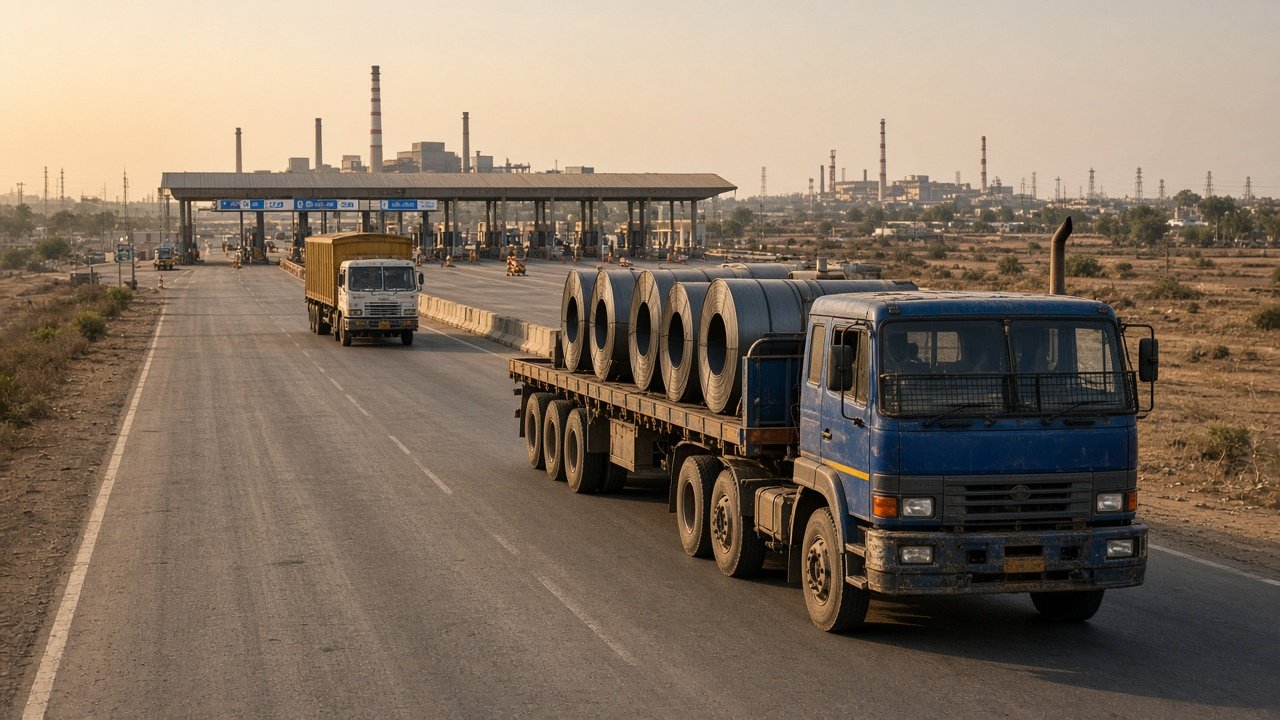
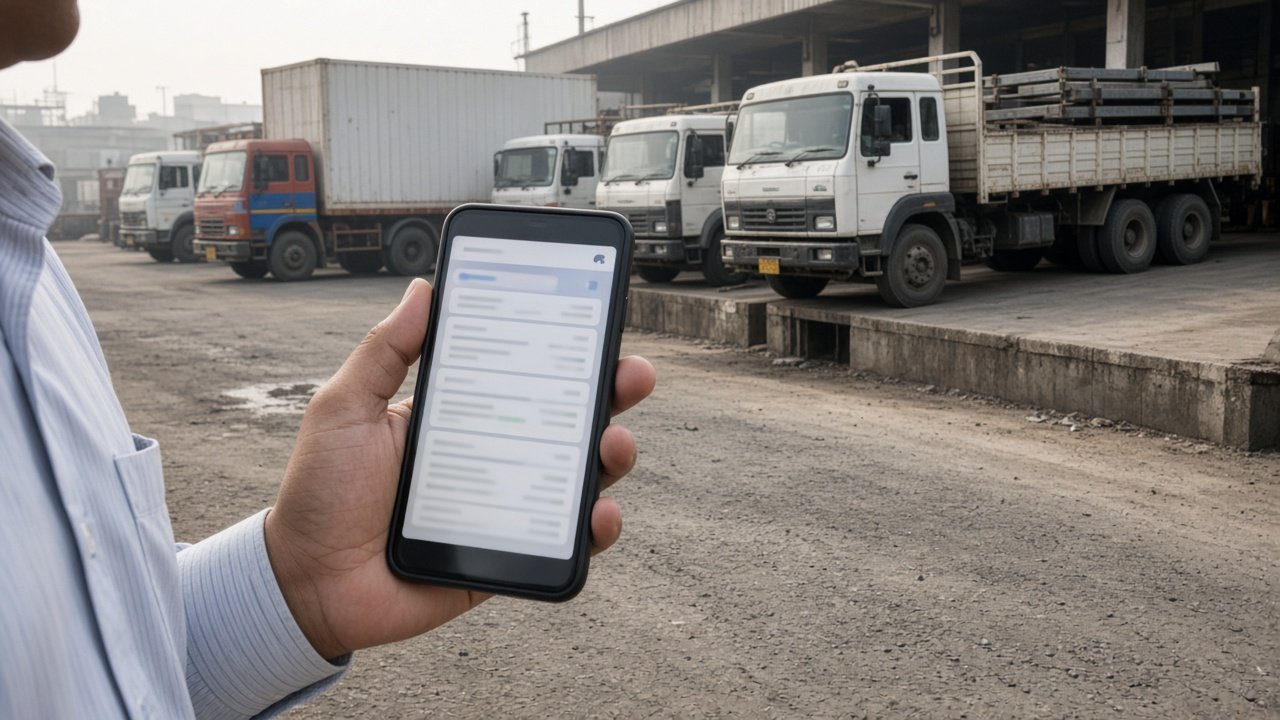
Composite from corridor practice (details changed). A Raipur fabrication desk needed a 25-tonne multi-axle for Bhiwandi by Thursday morning. The plant buyer called the usual primary broker. The broker called a regional contact. The regional contact called a Transport Nagar lorry supplier. By the time a truck registration appeared on WhatsApp, three people had touched the indent and none of them owned the asset. The shipper heard one number. The driver heard another. The gap funded the chain.
Most industrial freight in India still starts that way: a phone call into a Transport Nagar, a verbally anchored rate, and a vehicle that materialises after several hand-offs. The factory rate card rarely shows the full path. Consignor to primary freight broker to regional sub-broker to local lorry supplier - truck broker (dalal) to the asset-owning trucker or driver. Each hop extracts a fee, a favour, or a fuel-route preference.
Brokerage commission (dalali) is a stack, not a line item. Hypothetical teaching bands for some corridors: booking commission around Rs 500 to Rs 1,500 to place the indent into the freight market (mandi); vehicle placement Rs 1,000 to Rs 2,500 for gate timing; advances routed through a preferred diesel pump creating a quieter diesel-slip (diesel parchi) margin. These are not national averages - measure your lane before quoting percentages.
Information asymmetry is the business model. During harvest surges, monsoon choke points, and festival capacity squeezes, the freight market (mandi) hears both the factory panic and the idle truck inventory. The shipper is told capacity is impossible. The trucker is told freight is soft. The intermediary clears the spread. That is why opaque phone bidding survives even when everyone owns a smartphone.
Cash convention hardens the trap. Highway practice still pays about 65% to 70% advance at loading - fuel card or cash - because drivers cannot float diesel, tolls, and trip allowance (bhatta) for a 1,000-plus km run. The balance often waits 30 to 60 days while paper LRs courier back and finance disputes stamps. Drivers feel starved of trip cash. Shippers feel starved of invoice velocity. Both complaints are real; the paper chain causes both.
What a marketplace does
Matches shipper/supplier demand with truck capacity, with identity, evidence, and optionally a TMS handoff - pricing models differ.
Brokerage vs open matching
Traditional stacks can be opaque; open rails let parties negotiate trip rates direct. Treat percentage leakage bands as estimates until measured.
Corrections
Report factual errors to contact@zaftys.com with the article URL.
Primary query framing for online truck-load marketplaces in India.
Truck load marketplace
Digital rail where shippers publish FTL requirements and verified truckers accept at a negotiated trip rate, with identity and evidence on one timeline.
Closed aggregator vs open marketplace
Aggregator resells a landed rate that can embed a spread. Open marketplace lets parties negotiate direct with no platform cut on freight when that product policy applies.
Brokerage commission stack (dalali)
Multi-tier booking, placement, and diesel-slip commissions between the factory budget and the asset-owning trucker.
Ops vocabulary for this guide.
01
Consignor / factory desk
Sets budget and loading window.
02
Primary freight broker
Owns the shipper relationship and rate.
03
Regional sub-broker
Places the indent into a local freight market (mandi).
04
Lorry supplier - truck broker (dalal)
Finds the asset-owning trucker.
05
Trucker / driver
Runs the trip and carries the cash risk.
Operating pattern across regional Transport Nagars. Individual freight markets (mandis) differ.
| Fee layer | Workshop band | What it buys |
|---|---|---|
| Booking commission | Rs 500 - 1,500 | Indent placement into the freight market (mandi) |
| Vehicle placement | Rs 1,000 - 2,500 | Getting a truck to the gate on time |
| Diesel slip (diesel parchi) kickback | Pump / slip margin | Advance routed via preferred fuel pump |
Commercial workshop bands for teaching. Your freight-market (mandi) rate card controls.
Shipper blind spot
Factory desk hears one number. The trucker hears another. The gap funds the chain.
70:30 cash trap
About 65% to 70% advance at loading. Balance often waits 30 to 60 days while invoices crawl.
Harvest surges, monsoon choke points, and festival capacity squeezes.
Chapter 02
The evolution of digital freight: from closed aggregators to open marketplaces
First-generation digital freight products often digitised the broker, not the market. A closed aggregator collected shipper demand, controlled or pre-negotiated truck supply, and sold a landed rate. The shipper saw an app. The trucker still saw a take-it-or-leave-it number. The spread that used to live in Transport Nagar phone books moved into software.
BlackBuck's November 2024 Red Herring Prospectus (Zinka Logistics Solutions Limited) cites an estimated 8-10% commission range for offline marketplaces and brokers connecting shippers and truck operators (SEBI RHP PDF). That is an industry estimate in a formal offer document - not an audited national average, not every corridor or commodity, and not a rule that every online marketplace must charge the same. Distinguish a broker's commission from the difference between the amount billed to a shipper and the amount paid to a carrier.
Open marketplaces invert the commercial rule when parties negotiate the trip rate directly. The platform's job is identity, matching, evidence, and (for enterprises) a clean handoff into TMS gate-to-pay. On TranZfort, marketplace matching is free for truckers and transporters; the paid path is ZAFTYS TMS for transporters who need enterprise control. Legal hub: tranzfort.com/legal/. Compare product features and terms, not slogans.
Enterprises still cannot run multi-plant supply chains only on driver phones. They need seats, roles, ERP hooks, e-Way Bill discipline, and a shared ledger. That is ZAFTYS TMS for dedicated contract fleets and plant desks - with unfulfilled indents published into TranZfort (also TranZfort marketplace) when contracted carriers fail to place or season volume spikes. The honest product split is control on web, open capacity on Android, one audit trail when the trip returns.
01
WhatsApp and Telegram groups
Unregulated forwards, fake RC photos, zero accountability when a truck never shows.
02
Closed digital brokers / aggregators
App UI with controlled supply. Pricing stays closed. Any hidden-spread percentage is a workshop assumption until measured with like-for-like quotes.
03
Open digital marketplaces
TranZfort model: free find/post/chat matching for truckers and transporters; paid path is ZAFTYS TMS for transporters who need enterprise control. Legal: tranzfort.com/legal/.
Market pattern for this guide. Not a venture share table.
01
Direct peer matching
Indie suppliers and truckers negotiate on Android without a freight-market (mandi) middle desk.
02
Vernacular + voice
Hindi and English UI with audio read-aloud so highway drivers are not locked out by English-only forms.
03
Enterprise handoff
Corporate fleets stay on ZAFTYS web TMS. Overflow indents publish into the open marketplace when contracts cannot place.
Product positioning for this guide.
Chapter 03
The mathematical cost of intermediation: the broker margin tax
Hypothetical ZAFTYS Intelligence freight-cost scenario (assumptions for calculation literacy - not an audited trip file and not a real customer transaction). Illustrative operating-cost floor: Rs 54,000. Illustrative brokered freight invoice: Rs 62,000. Illustrative alternative freight invoice: Rs 55,800. Difference between the two invoices: Rs 6,200. Difference as a proportion of Rs 62,000: 10%. These values demonstrate arithmetic only; they are not measured market savings.
Comparisons require equivalent routes, cargo, vehicle specifications, service conditions, and payment terms. Without the original trip file (fuel litres and price, tolls, driver expenses, loading/unloading, empty running, maintenance, waiting time, route, vehicle, cargo, date, and quote sources), do not publish invented component rupee amounts as a real case study. Use the editable cost-breakdown framework in the exhibits - leave cells blank until you have source data. Define whether 'operating floor' includes fixed costs, depreciation, financing, overhead, or profit before treating Rs 54,000 as a fully loaded break-even.
Read any waterfall or pie in this guide as a teaching tool, not a national index. Rebuild the floor with the truck freight rates guide before you treat any screenshot as a rate card.
Return-load dwell is the second tax. Define it as clock time from empty after unload until the next paid load is accepted - not transit time and not plant detention. Without a dated lane sample (size, period, exclusions, median/percentiles), do not publish 48-72 hours as an industry average - treat dwell as a variable your desk must measure. Standing cost still burns while the truck waits. Faster return discovery is part of marketplace value, not only cheaper outbound freight.
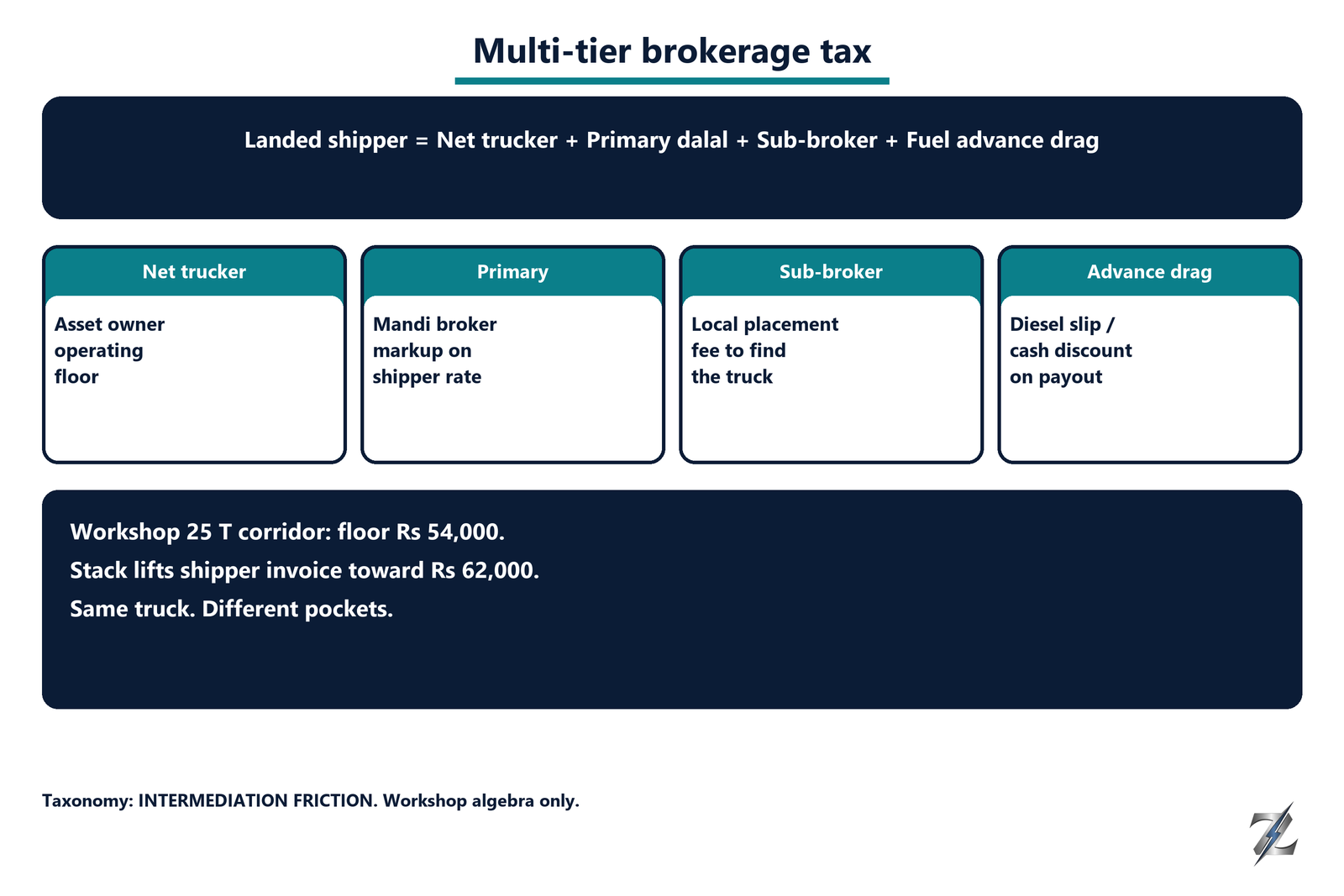
Workshop algebra. Recompute with your lane's brokerage commission (dalali) stack.
- Truck direct operating (diesel, tolls, AdBlue) · 54%
- Fleet capital and standing (EMI, tyres, maintenance) · 26%
- Driver trip wages and trip allowance (bhatta) · 8%
- Multi-tier brokerage commission (dalali) · 12%
Single-denominator workshop pie for this guide (100%). Not a ZAFTYS audited national rate index.
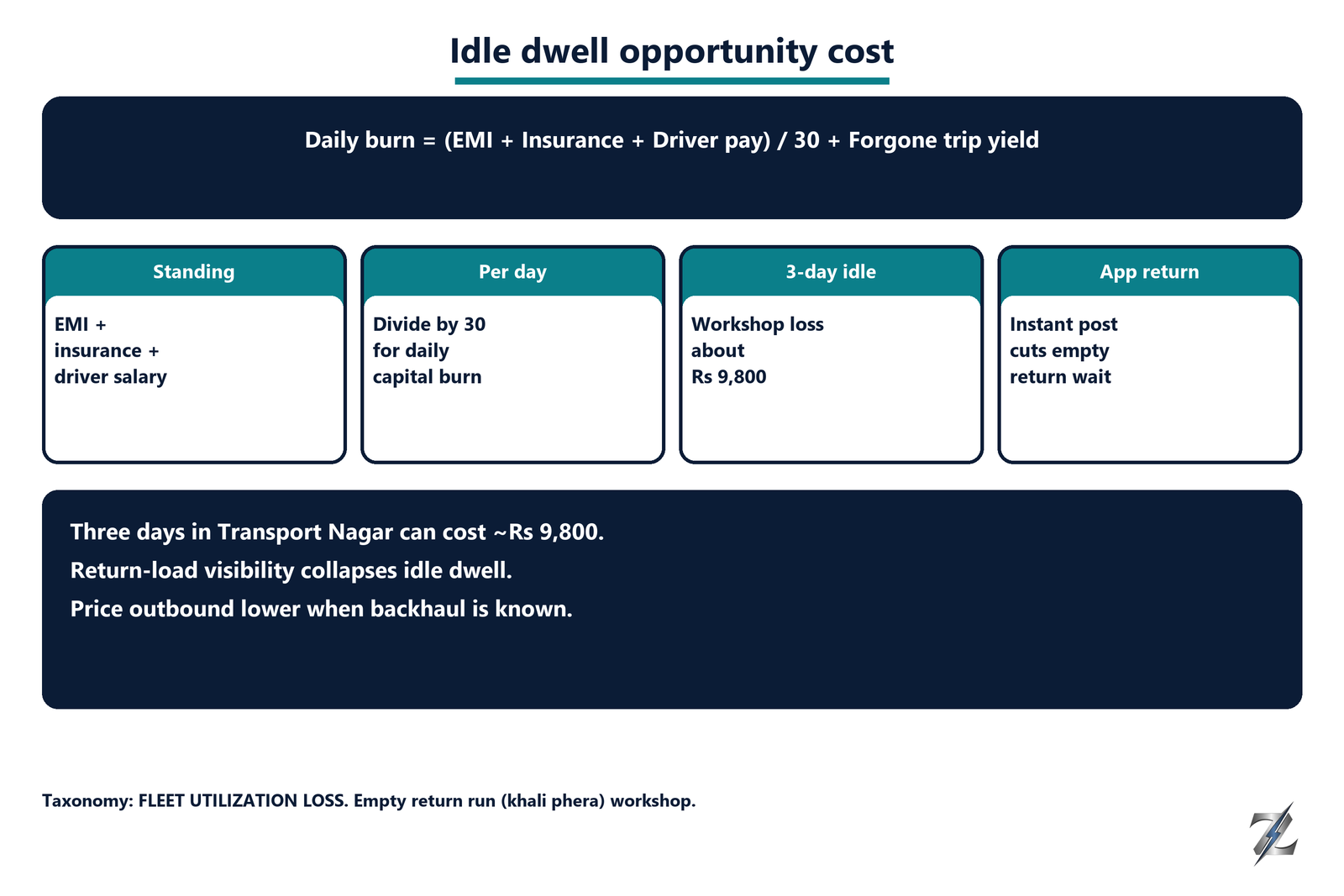
Illustrative teaching graphic. Return-load dwell is a variable to measure - not a published national average.
| Input / output | Assumed value | Notes |
|---|---|---|
| Loaded km (outbound) | 1,150 km | Raipur-Bhiwandi teaching corridor class |
| Empty km before backhaul | 80 km | Reposition assumption |
| Assumed fuel efficiency | 3.5 km/l | Assumption - not a measured fleet average |
| Assumed diesel price | Rs 90 / litre | Placeholder - insert dated pump price |
| Fuel litres (1,230 km / 3.5) | ~351 l | Fuel = total km / km per litre |
| Fuel cost | ~Rs 31,600 | Litres x diesel price |
| Toll + driver + trip expenses (assumed) | Rs 12,000 | Bundle assumption - split when you have data |
| Outbound freight revenue (assumed) | Rs 55,800 | Direct-match teaching price |
| Return freight revenue (assumed) | Rs 28,000 | Only if a return load is actually secured |
| Waiting / dwell before return accept | Measure - do not assume | Start: empty after unload; end: return load accepted |
| Contribution formulas | Outbound: revenue - trip costs; Backhaul: return revenue - incremental return costs | Not all return revenue is incremental profit |
Illustrative only. Replace every assumption with your lane data before board use. A return load is not always available.
| Dimension | Traditional broker | Closed aggregator / fleet network | Open digital marketplace | Direct shipper-carrier |
|---|---|---|---|---|
| Who sets price | Broker / chain | Platform or controlled supply | Parties negotiate | Contract negotiation |
| Commission / spread disclosed | Often opaque | Often embedded in landed rate | Should state platform fee policy | Usually none beyond contract |
| Verification approach | Relationship / paper | Platform KYC + fleet rules | Profile + docs + plant gate | Known fleet + plant gate |
| Payment responsibility | Often broker-mediated | Per platform terms | Per post / in-app terms | Per MSA |
| POD / dispute workflow | Phone + paper | App milestones vary | In-app milestones when used | MSA + ePOD |
| Role of intermediary | Intermediary | Often contracting / controlling party | Matching tool vs intermediary - read terms | Usually none |
Educational compare. Confirm each platform's live terms before relying on a cell.
Free for truckers and transporters
Marketplace matching - find loads, post loads, chat, and call - is free for truckers and transporters.
Paid path: TMS
Charges apply when a transporter uses ZAFTYS TMS services for enterprise gate-to-pay control - not as a cut of the negotiated trip freight on open matching.
Legal documents
Privacy Policy and Terms of Service live under https://tranzfort.com/legal/ (also linked from in-app Settings → Legal).
Product confirmation 18 Nov 2026. Live legal hub: https://tranzfort.com/legal/. Terms can change - re-check before commercial reliance.
Scenario numbers
Illustrative operating-cost floor Rs 54,000; illustrative brokered freight invoice Rs 62,000; illustrative alternative freight invoice Rs 55,800; invoice difference Rs 6,200; proportion of Rs 62,000 = 10%.
What this does not prove
It does not prove Rs 54,000 is a real trip's operating cost, or that the alternative invoices are commercially comparable without matched assumptions.
Broker commission context
Separately, BlackBuck's Nov 2024 RHP cites an estimated 8-10% offline broker commission range - an industry estimate, not this scenario's measured spread.
Assumptions for demonstrating calculation only - not measured market savings and not a real customer transaction. Matched route, cargo, vehicle, service, and payment terms are required before any comparison claim.
| Cost component | Your amount (Rs) | Source / notes |
|---|---|---|
| Fuel / diesel | Litres x pump price; date the receipt | |
| Tolls | Plaza receipts or FASTag statement | |
| Driver expenses / allowance | Trip sheet or MSA schedule | |
| Loading / unloading | Labour, equipment, or detention-linked charges | |
| Empty running (khali phera) | Empty km x cost basis you define | |
| Maintenance / wear allocation | Only if your policy allocates trip share | |
| Waiting / detention time | Clock events and free-time rules | |
| Other (specify) | Insurance trip share, parking, etc. - name it | |
| Illustrative scenario floor (reference only) | 54,000 | Hypothetical teaching number - replace with your sum |
Fill only from source documents. Leave cells blank rather than inventing rupees. Sum of filled components still may not equal a commercial 'floor' if fixed costs or profit are excluded.
Chapter 04
How digital load matching works: direct in-app discovery and negotiation
Marketplace matching fails when the post is a WhatsApp forward with three numbers and a commodity nickname. Industrial desks need pin-level origins and destinations, body type, net payload, commodity description, loading window, and advance terms on the first screen. The TranZfort walkthrough exhibits below show the current Android create-load, find, detail, chat, and Settings → Legal flows - production screenshots, not mockups.
Ambiguous '32ft container' language is a special failure mode. SXL and MXL are commercial axle-class labels, not fixed payload standards. Post axle class and RC GVW - or expect wrong chassis. Detail: 32-ft container sizing.
In-app call and chat keep rate, advance, and window on one thread. Payment terms on the post reduce cancel risk: state advance percentage, balance trigger (POD upload versus physical LR), and any detention free time. Truckers price uncertainty. Matching stays free for truckers and transporters; TMS is the paid enterprise path.
Document gate rules on the post when they are non-standard: weighbridge mandatory, chassis rubbing, Hazchem endorsement, night entry ban. Surprises at security are how confirmed trucks become afternoon dropouts. Download: Play Store · legal: tranzfort.com/legal/ · overview TranZfort marketplace.
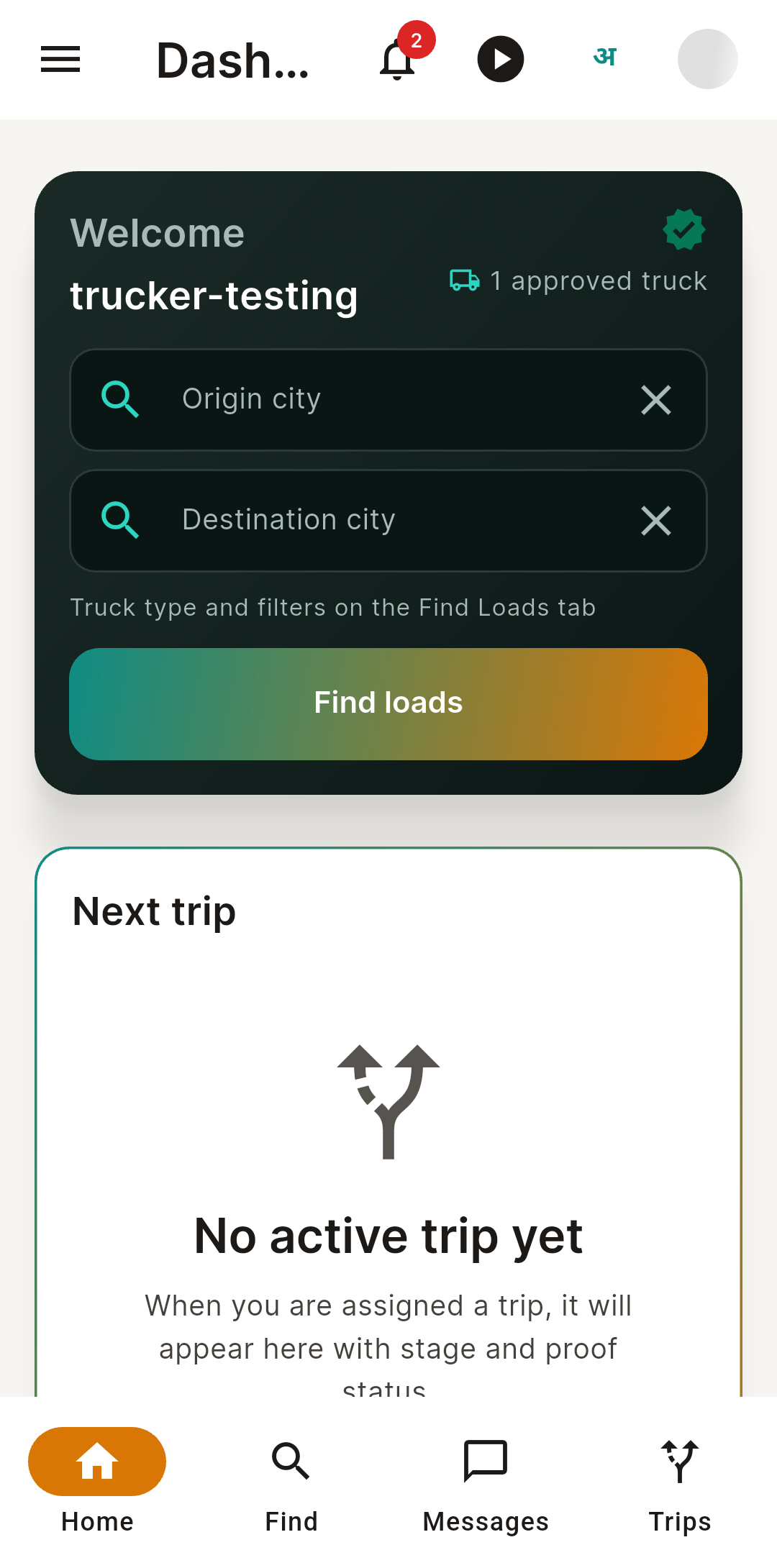
1. Trucker home / Find Loads
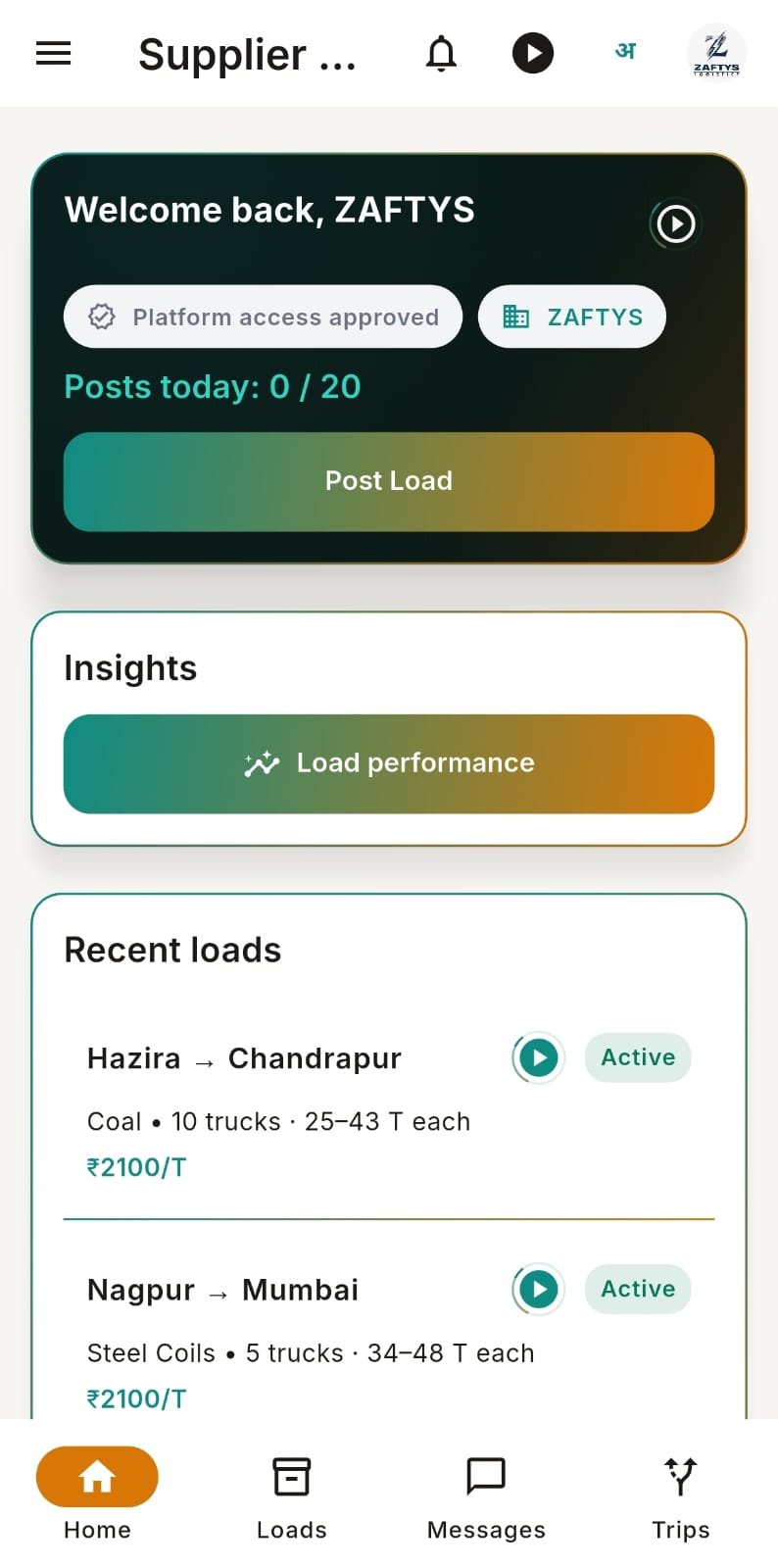
2. Supplier home - Post Load
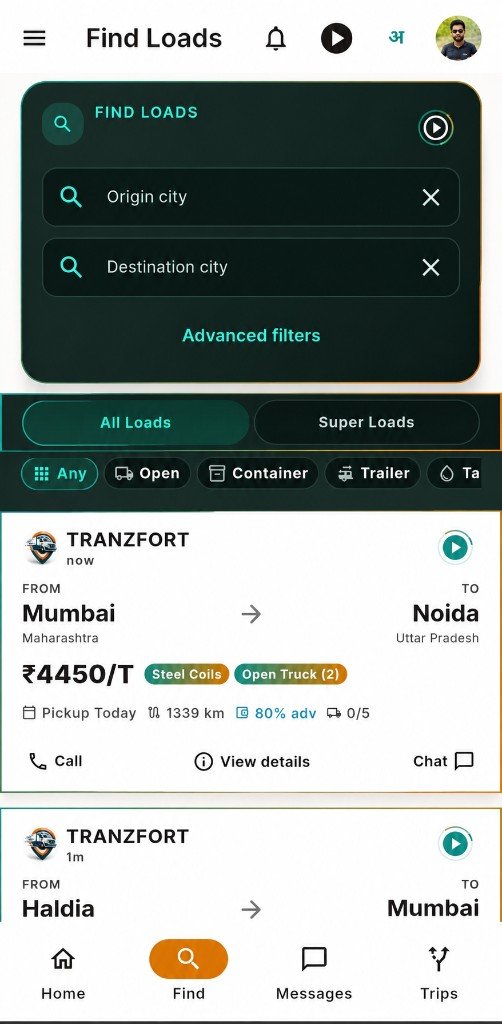
3. Find Loads list - route, rate, tags
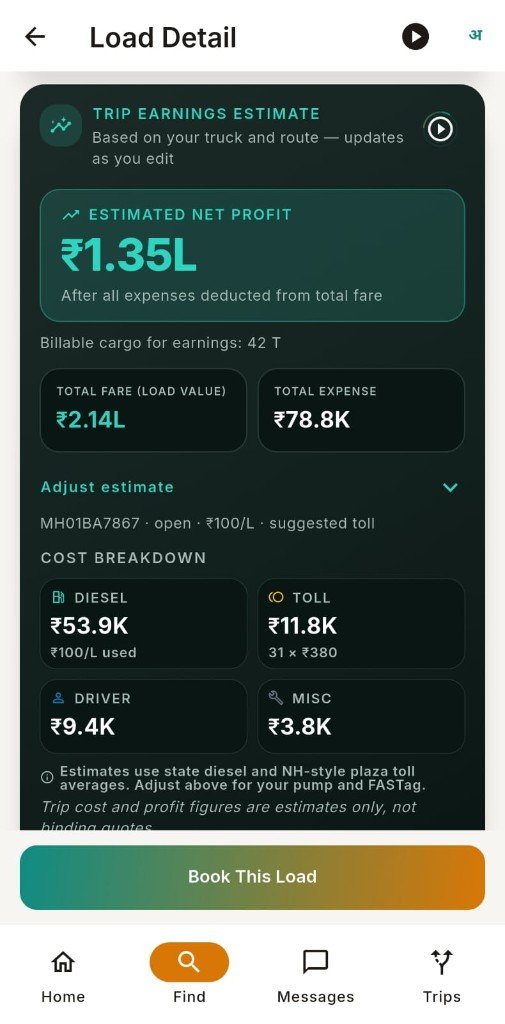
4. Load detail - estimate & book
Current Android production screenshots (masked test account). Rates, routes, and earnings figures are example UI values - not binding quotes. Captured for this guide 18-19 Nov 2026.
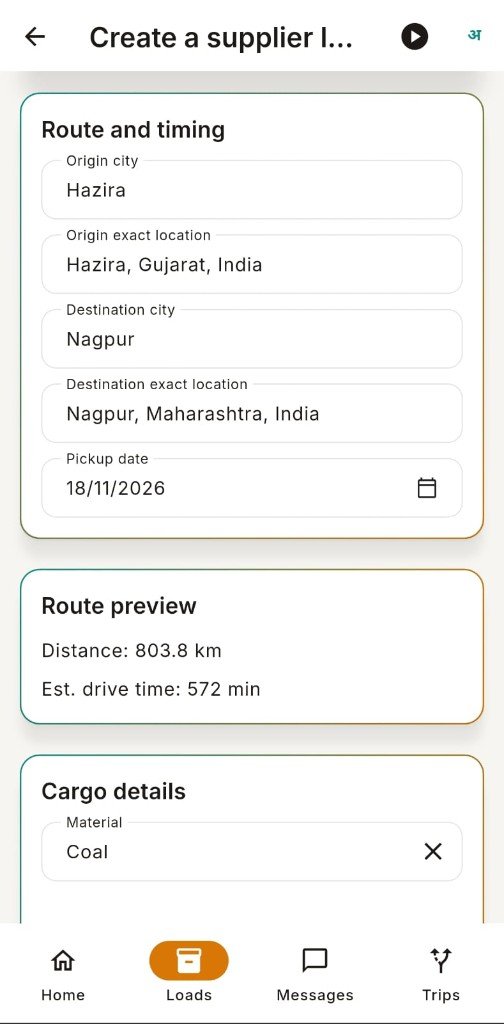
5. Create supplier load
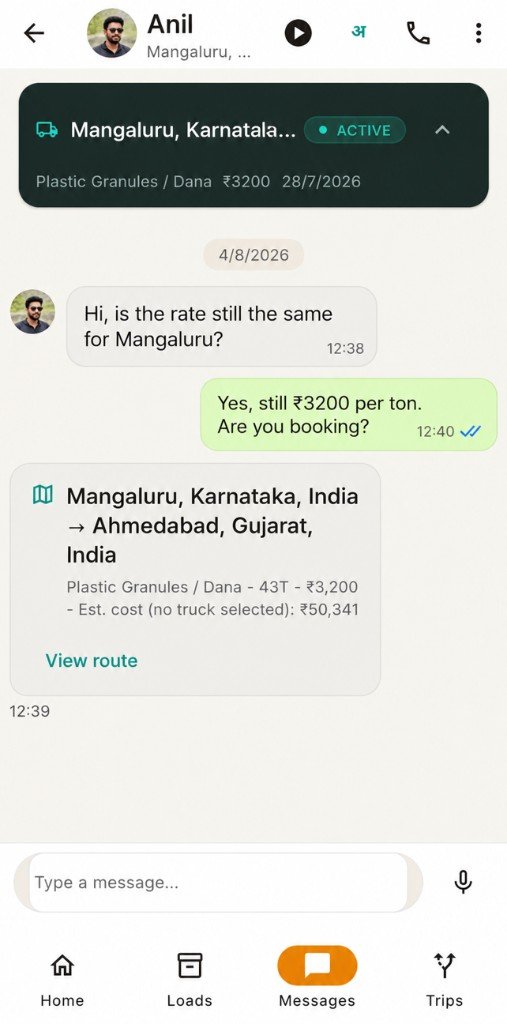
6. In-app chat - negotiate rate
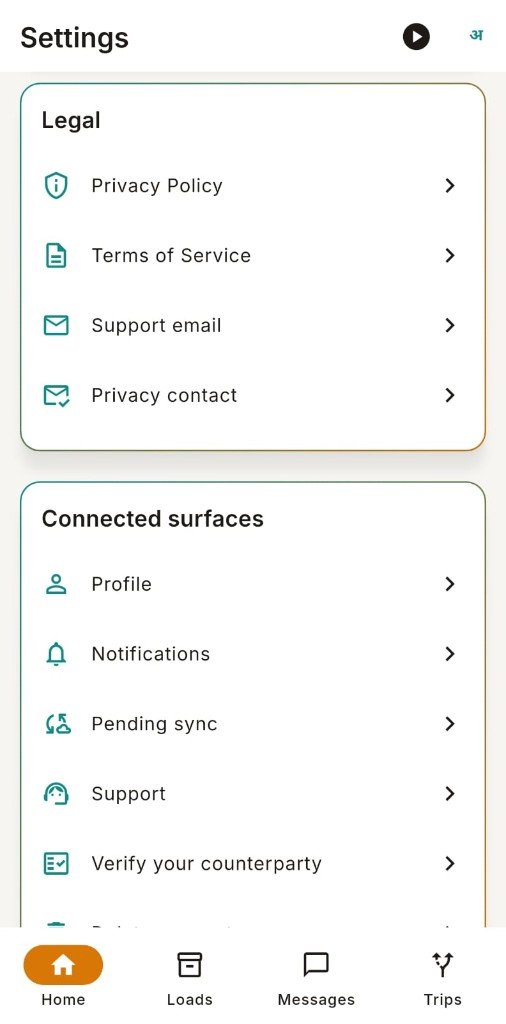
7. Settings - Legal links
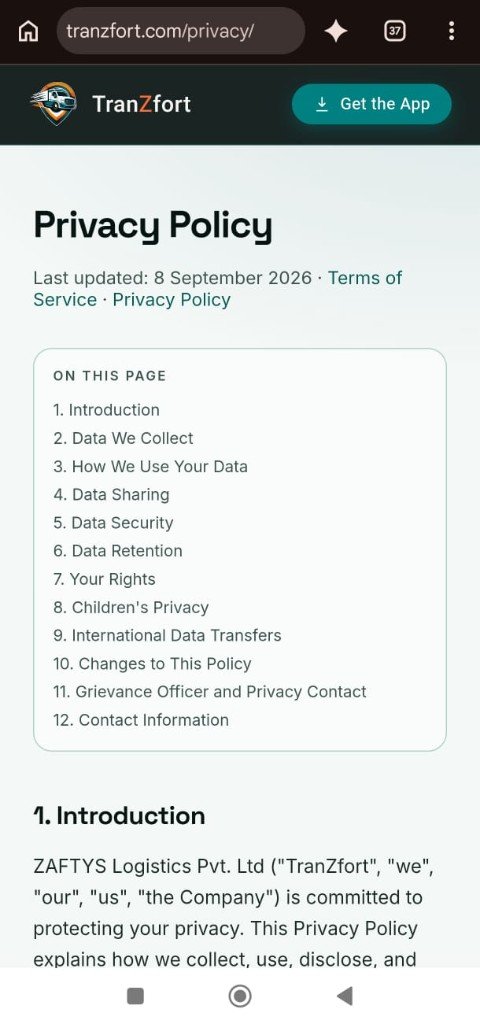
8. Live legal hub (web)
Current Android production screenshots and live legal page. Personal identity remains on the counterparty profile the user already sees in-app. Legal hub: https://tranzfort.com/legal/.
Download
Play Store: play.google.com/store/apps/details?id=com.tranzfort.app · Overview: /network/tranzfort
Fees
Free for truckers and transporters on marketplace matching. Paid path is ZAFTYS TMS for transporters who need enterprise TMS services.
Still verify offline
RC, fitness, driver licence, cargo suitability, tax path, and plant gate controls remain the user's responsibility. Chat does not replace gate checks.
Product confirmation 18 Nov 2026. Re-check https://tranzfort.com/legal/ before commercial reliance.
01
Pins and window
Origin and destination industrial pin codes plus expected loading date and time.
02
Body and payload
Open, container, flatbed, or bulker - plus net payload tonnes, not only GVW.
03
Commodity truth
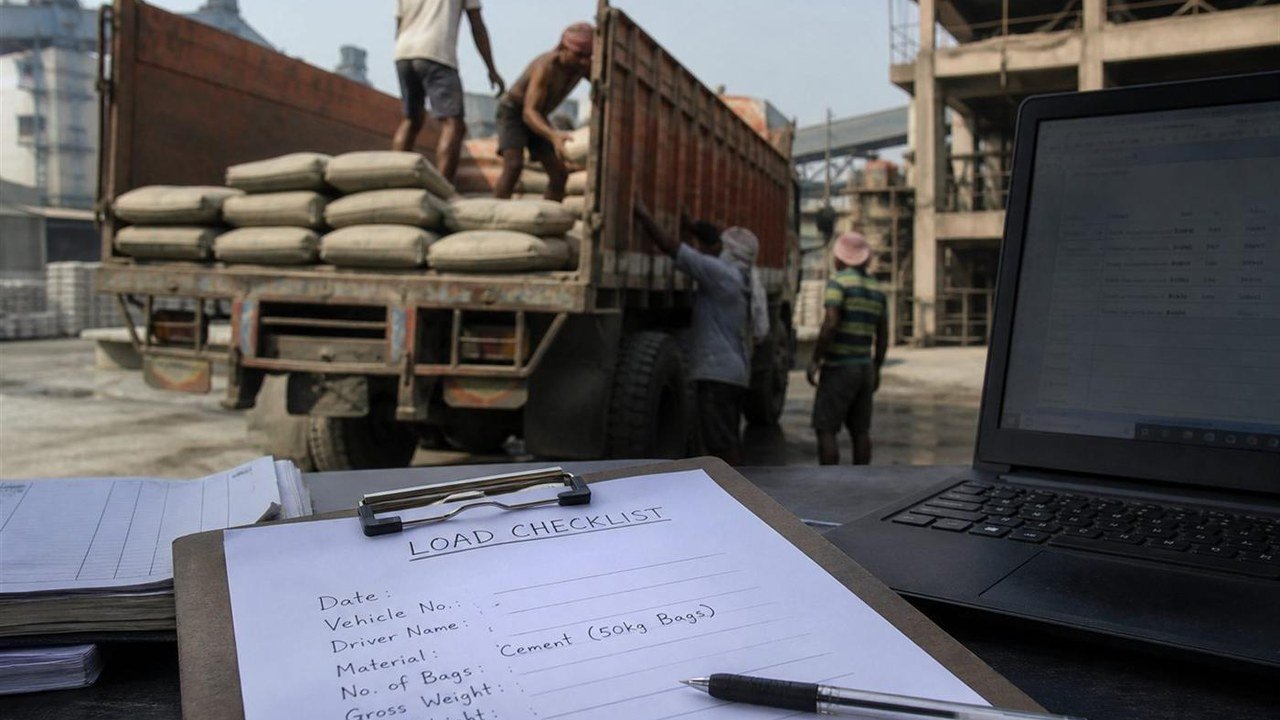
What is on the truck (steel billets, bagged cement, FMCG cartons) so truckers self-select.
Desk checklist for factory dispatchers and indie suppliers.
Open negotiation wins
Truckers adjust bids when they already hold a return load. Fixed algorithm prices miss that local knowledge.
Voice and vernacular
Audio read-aloud and simple mobile-first screens close the digital divide with commercial drivers.
Operating preference for open marketplaces.
Chapter 05
Document verification and trust architecture: vetting before loading
Four trust layers before the bay opens. First, Vahan RC: maker/model, tare, GVW, chassis, fitness, tax, goods permit. Second, commercial driving licence class on Sarathi. Third, business identity - PAN / GSTIN for the booking party. Fourth, verified trip history and cancel rates on the profile.
Marketplace KYC is necessary and insufficient for high-value cargo. Plants still run gate controls - chassis pencil rubbing, FASTag plausibility, driver photo match - especially on copper, coils, electronics, and agro-chemicals. Full protocol: bogus truck and vehicle verification.
Insurance warranties care about due diligence. A beautiful app booking without a live registry query is still a surveyor problem after diversion. Claim hygiene sits in transit damage and cargo insurance.
- 01
Commercial vehicle RC
Chassis, engine, unladen tare, and gross vehicle weight against the registration.
- 02
Driver identity and licence
Commercial HGMV / HMV validity and Hazchem endorsements when cargo needs them.
- 03
Business identity
Transporter or supplier PAN, GSTIN, and trade name match.
- 04
Profile and trip history
In-app rating scorecards from verified completed deliveries - not WhatsApp screenshots.
Gate SOP orientation. Confirm Vahan / Sarathi live responses on the day.
Paper lies
Stolen chassis numbers, fake RC PDFs, cloned plates, and non-existent fleet owners still move on informal groups.
Desk rule
No Vahan / DL / PAN pass, no gate-in. Photo of an RC is not verification.
Fraud pattern briefing. Not a crime-incidence index.
Vahan before gate-in
Do not load on a screenshot RC
Share how you vet vehicles today. We map RC, DL, and PAN checks into the booking SOP.
Chapter 06
In-transit operations: digital milestones, photo proofs, and paperwork
Telephone check-calls create two ledgers: the one the dispatcher believes and the one the driver invents under pressure. In-app milestones - Gate-In, Loading, LR upload, In-Transit, Unloading, Clean POD - collapse that gap when photos and timestamps are mandatory.
ePOD quality still decides billing speed. Stamps must be readable, vehicle numbers must match, shortage remarks must be explicit. Marketplace photos that are dark, cropped, or unsigned recreate the courier fight. Close-out detail: ePOD, FASTag, and e-Way Bill billing.
Enterprises should pull marketplace trips into the same TMS ledger as contract fleets so finance does not reconcile two universes at month-end. Architecture: industrial TMS control stack.
01
Gate-In
Vehicle placement confirmed at origin.
02
Tare and loading
Tare weight recorded; loading photo captured.
03
Gross + LR
Weighbridge slip and consignment note / LR (bilty) photo on the timeline.
04
In-transit
Highway progress without harassing the driver for check-calls.
05
Dest Gate-In
Unloading window starts with photo proof.
06
Clean POD
Stamped and signed delivery copy uploaded in-app.
Marketplace / TMS milestone pattern. Pair with plant gate SOPs.
Check-calls distract
Manual status rings pull drivers off the road and still leave gaps between calls.
Photo POD speeds cash
Immediate in-app LR / POD photos can cut billing dispute latency from ~45 days toward under 48 hours when finance trusts the file.
Highway safety and billing hygiene.
Chapter 07
Worked financial case: 25-tonne industrial freight corridor
Same hypothetical ZAFTYS Intelligence scenario: operating-cost floor Rs 54,000; brokered invoice Rs 62,000; alternative invoice Rs 55,800; invoice difference Rs 6,200 (10% of Rs 62,000). Assumptions for demonstrating the calculation - not measured savings and not a ZAFTYS audited trip.
Do not paste those rupees into a tender. Recompute diesel, toll class, empty-return probability, and standing cost with the freight rates guide on matched vehicle, route, cargo, service, and payment terms. The lesson is governance transparency, not a fixed national spread.
When contracts fail to place, the same desk should already know how fast labeled marketplace overflow is allowed - otherwise afternoon spot panic recreates the markup the morning rate card claimed to kill. Cascading detail: indent / OTIF guide.
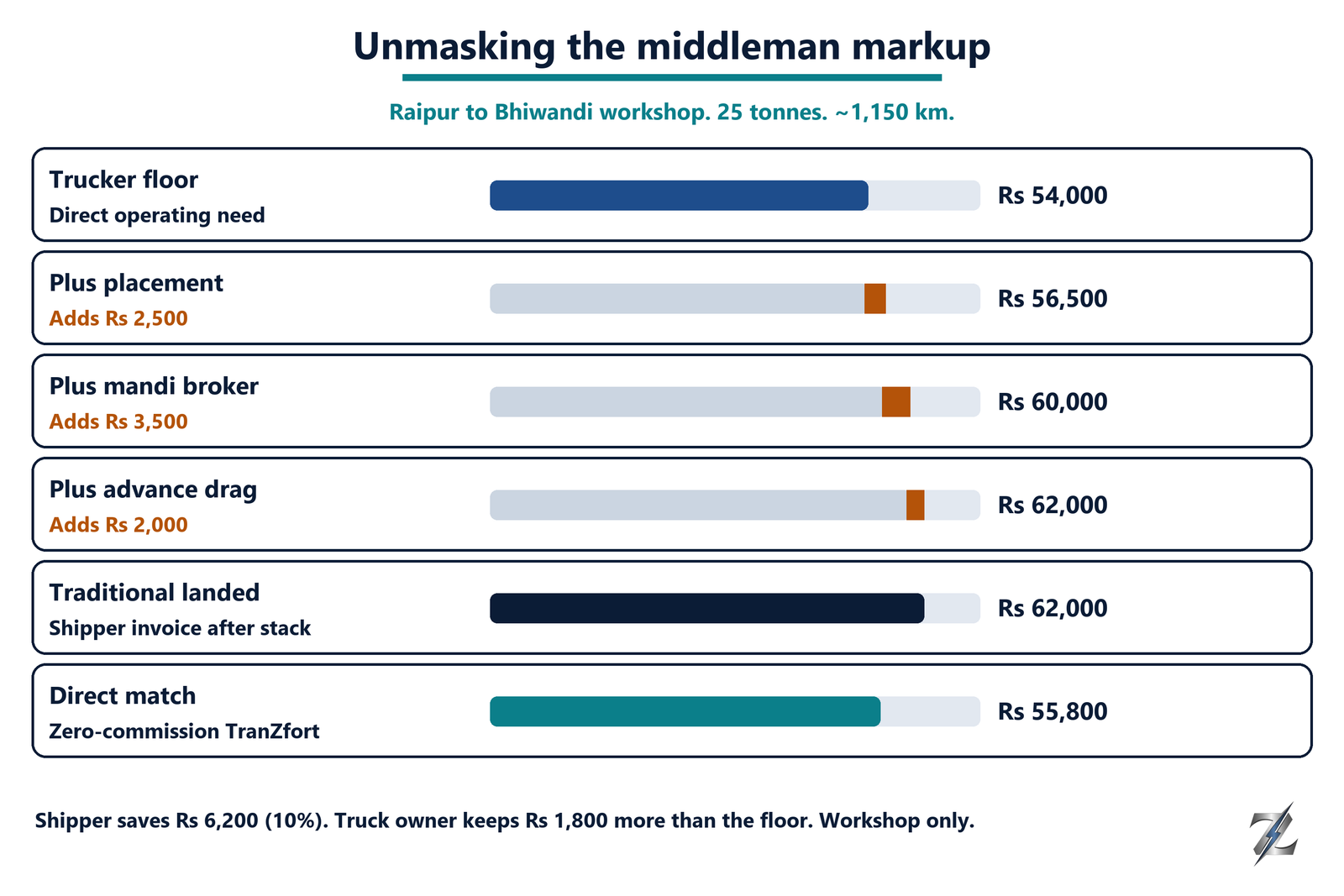
Hypothetical ZAFTYS Intelligence scenario waterfall: floor Rs 54,000; brokered invoice Rs 62,000; alternative invoice Rs 55,800 (difference Rs 6,200 = 10% of Rs 62,000). Not an audited trip file.
| Line | Brokered invoice path (hyp.) | Alternative invoice path (hyp.) | Notes |
|---|---|---|---|
| Illustrative shipper freight invoice | Rs 62,000 | Rs 55,800 | Assumed invoices for arithmetic |
| Illustrative operating-cost floor | Rs 54,000 | Rs 54,000 | Same assumed floor on both paths |
| Invoice difference vs Rs 62,000 | Rs 0 (baseline) | Rs 6,200 (10% of Rs 62,000) | Difference = 62000 - 55800 |
| Component rupee split | Not invented here | Not invented here | Use the editable framework; leave blank without sources |
| Comparability gate | Must match | Must match | Route, cargo, vehicle, service, payment terms |
ZAFTYS Intelligence teaching ledger only. Corridor class ~1,150 km / 25 T payload assumptions are illustrative. Do not treat as measured savings.
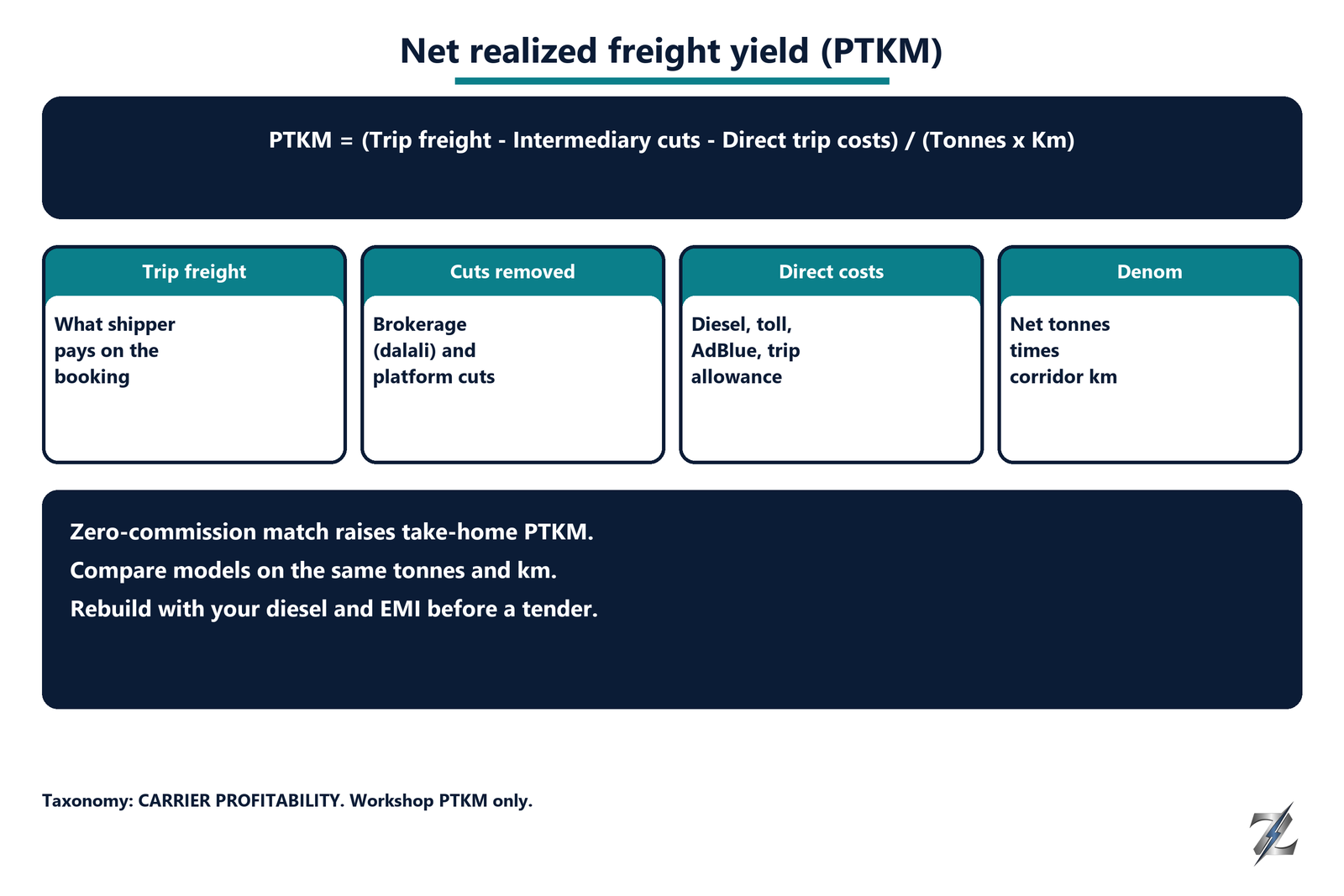
Workshop PTKM after intermediary cuts. Recompute with your own diesel and EMI.
What the arithmetic shows
Under matched assumptions, Rs 62,000 vs Rs 55,800 differs by Rs 6,200 (10% of Rs 62,000). That is illustration, not measured market savings.
What you must still match
Same route, cargo, vehicle specification, service level, and payment terms - or the comparison is invalid.
Broker commission context
BlackBuck Nov 2024 RHP cites an estimated 8-10% offline broker commission range as an industry estimate - not this scenario's audited spread.
ZAFTYS Intelligence. Replace every assumption with live quotes before board or tender use.
Chapter 08
Standard operating procedure: the 8-step direct load booking workflow
Write the SOP so a night-shift dispatcher cannot invent a parallel WhatsApp process. Eight stages from indent creation through POD and pay.
Step 01: create the indent with pin codes, body, payload, commodity, window, and advance terms. Step 02: offer to contracted L1 capacity first when the lane is dedicated. Step 03: on timeout, cascade L2. Step 04: publish labeled overflow to the open marketplace. Step 05: accept only verified profiles. Step 06: gate-in with Vahan/Sarathi/chassis controls. Step 07: capture LR, seal, and milestones. Step 08: close with clean POD and tax-correct settlement.
Print the process board. When a stage breaks, the exception is owned. Pair with cost-leak hygiene in 5 hidden cost leaks.
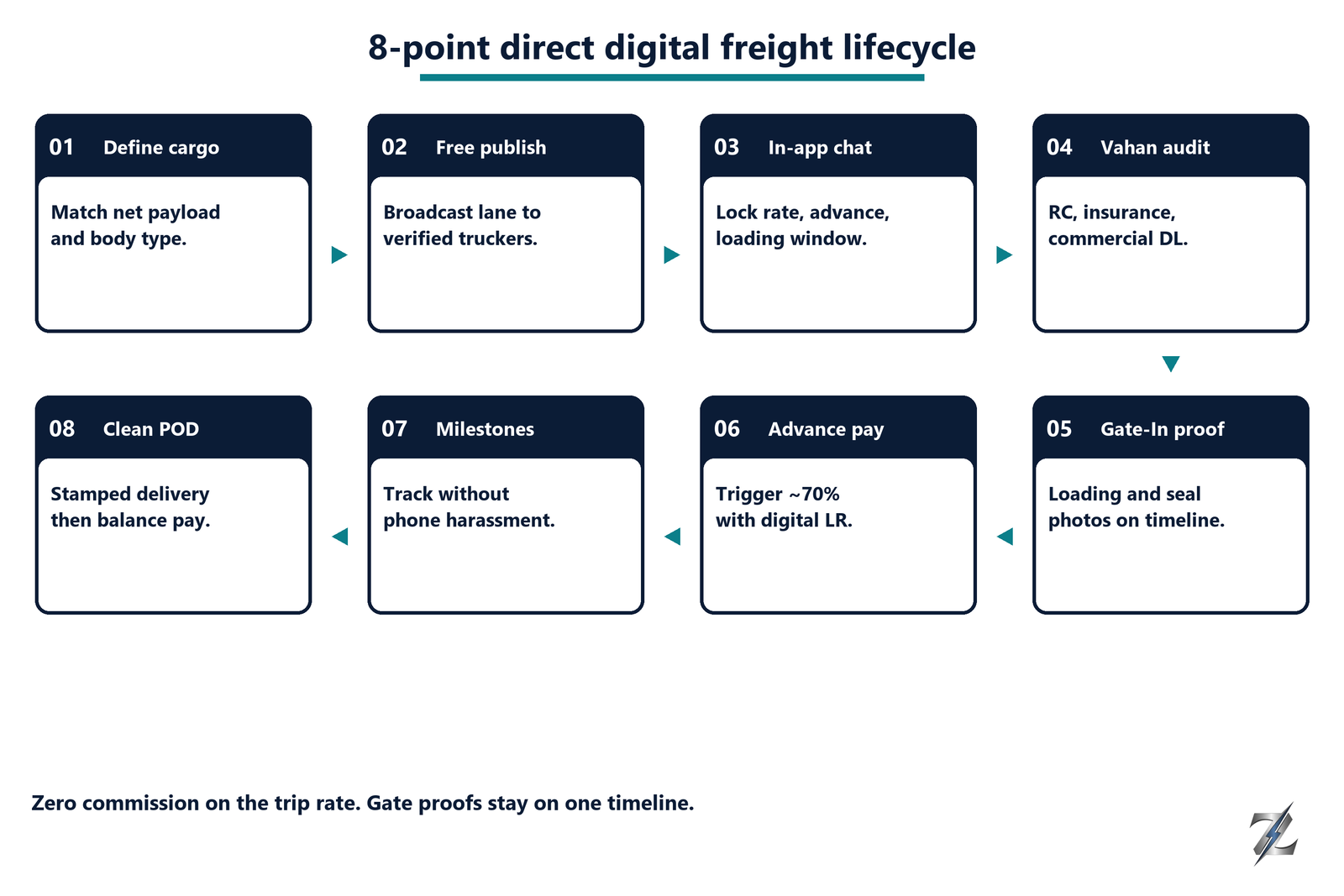
Operating sequence for manufacturing desks and indie suppliers on open marketplaces.
- 01
01 Define cargo and body
Match net payload and body type to the commodity.
- 02
02 Free load publication
Broadcast lane needs to verified truckers at zero post fee.
- 03
03 In-app chat negotiation
Lock freight rate, advance terms, and loading window.
- 04
04 Vahan document audit
Verify RC, insurance, and commercial DL before gate.
- 05
05 Gate-In photo proof
Capture loading and seal photos on the trip timeline.
- 06
06 Advance disbursement
Trigger contracted ~70% advance with digital LR.
- 07
07 Milestone tracking
Watch highway progress without phone harassment.
- 08
08 Clean POD settlement
Upload stamped delivery copy; pay balance fast.
Same sequence as the process board. Print for the dispatch wall.
Chapter 09
Enterprise integration: connecting web TMS to open mobile marketplaces
Enterprises still cannot run multi-plant supply chains only on driver phones. They need seats, roles, ERP hooks, e-Way Bill discipline, and a shared ledger. That is ZAFTYS TMS for dedicated contract fleets and plant desks - with unfulfilled indents published into TranZfort (also TranZfort marketplace) when contracted carriers fail to place or season volume spikes.
Indent cascading belongs in the TMS: L1 timeout, L2 cascade, then marketplace push. Detail: transporter indent management and OTIF.
Tax coding belongs in the same handoff. Marketplace matching does not choose RCM versus forward charge for you. Map each trip before AP posts using the GTA GST guide.
01
Tier 1 - ZAFTYS command centre
Multi-seat web TMS for logistics heads, planners, and gate weigh operators. Dedicated contract fleets, ERP sync, e-Way Bill, ledgers.
02
Tier 2 - TranZfort open capacity
When contracts fail to place or season spikes, unfulfilled indents publish into the Android marketplace for direct truck matching.
03
Unified control layer
Open-market bookings feed back into the ZAFTYS dashboard for gate-to-pay settlement - one audit trail, two capacity sources.
ZAFTYS web TMS + TranZfort Android marketplace positioning for this guide.
Multi-plant desks need seats
Shift planners, weighbridge clerks, and finance need shared web workflows - not one phone per plant.
Hybrid is the point
Keep dedicated fleets contracted. Label marketplace overflow. See also [spot vs dedicated](/blog/spot-market-vs-dedicated-fleet-india).
Enterprise ops constraint.
Chapter 10
The 20-point freight marketplace readiness audit and FAQs
Score the diagnostic with dispatch, procurement, and finance in one room. Rate each line 1 to 5. Skip equals 0. A desk that still awards lanes only by lowest WhatsApp quote has already failed the first control.
The donut is a teaching pie for where freight rupees go in a traditional brokered trip - not a national audit index. Rebuild your corridor with measured diesel and standing cost before you paste any percentage into a board pack.
FAQs below cover marketplace definition, aggregator versus open matching, TranZfort free matching vs TMS fees, pre-booking verification, LR/POD evidence, cancel handling, GTA tax impact, hybrid TMS design, and high-converting load posts.
Statutory orientation only: Carriage by Road Act, 2007 and Carriage by Road Rules, 2011; Information Technology Act, 2000; Central Motor Vehicles Rules, 1989 (including Rules 9 and 138A framing); CGST Rule 138 on e-Way Bill Part B updates. Confirm bare text before a demand letter or tax memo. This guide is operations research for industrial desks - not legal advice. Product legal hub: tranzfort.com/legal/.
Next step for a plant desk: keep contract fleets on ZAFTYS TMS and open free overflow matching for truckers/transporters on TranZfort (also TranZfort marketplace · Play Store · Legal), with the 8-step SOP and 20-point audit as the written operating standard.
Fleet sourcing
Weight 20%·Lines 1-5
- 1
Can the desk post an FTL indent without calling a freight-market broker (mandi dalal)?
- 2
Are origin / destination pins and body type mandatory on every load post?
- 3
Is return-load visibility available to truckers before they bid outbound?
- 4
Are WhatsApp-only bookings banned for high-value industrial cargo?
- 5
Can overflow from dedicated contracts publish to an open marketplace in one click?
Documents
Weight 15%·Lines 6-10
- 6
Is commercial RC checked on Vahan before gate-in?
- 7
Is driver commercial DL (HGMV / HMV) verified the same day?
- 8
Are supplier / transporter PAN and GSTIN on file?
- 9
Does the desk refuse cloned-plate or screenshot-only RC packs?
- 10
Is trip history / rating reviewed before first load with a new trucker?
Transit visibility
Weight 20%·Lines 11-15
- 11
Are Gate-In, Loading, LR, In-Transit, Unload, POD milestones in one timeline?
- 12
Are LR and POD photos captured in-app (not only WhatsApp albums)?
- 13
Has the desk stopped routine highway check-call harassment?
- 14
Does e-Way Bill Part B update when the vehicle actually moves?
- 15
Can plant and finance see the same trip status without a phone chain?
Finance and ERP
Weight 20%·Lines 16-20
- 16
Is ~70% advance contractually timed to loading / LR upload?
- 17
Does clean POD unlock balance settlement inside 48 hours when proofs are clean?
- 18
Are broker / platform fees line-itemed (or proven zero) on every trip?
- 19
Is GTA / RCM GST ownership clear on marketplace vs contract trips?
- 20
Do marketplace trips post into the enterprise TMS ledger for audit?
Coaching matrix for shippers and fleet owners. Not a certification product.
Appendix
Frequently asked questions
What is a truck load marketplace in India?
A truck load marketplace is a digital matching rail where shippers (or indie suppliers) publish FTL / part-load requirements and verified truckers or fleet owners accept at a negotiated trip rate. Unlike a Transport Nagar phone chain, the indent, vehicle identity, chat, and often LR / POD evidence sit on one timeline. Open marketplaces typically do not take a cut of the freight; closed aggregators historically monetised a hidden rate spread.
What is the difference between a freight aggregator and an open load marketplace?
A closed aggregator often buys or controls capacity and resells a landed rate to the shipper, which can embed a hidden spread the trucker never sees - treat percentage bands as workshop assumptions until measured. An open marketplace publishes the load, lets verified parties negotiate the trip rate directly, and can keep matching free of a freight commission. Control systems (multi-plant TMS, e-Way Bill, AP) remain separate from the matching rail.
Is TranZfort free for truckers and transporters?
Yes for marketplace matching: truckers and transporters can find loads, post loads, chat, and call without a platform cut of the negotiated trip freight. TranZfort / ZAFTYS charges transporters who use ZAFTYS TMS services for enterprise gate-to-pay control. Live legal documents: tranzfort.com/legal/. Download: Play Store.
How should a shipper verify a truck before booking on a digital marketplace?
Treat marketplace acceptance as a lead, not a cleared gate. Check live Vahan fields for RC, fitness, tax, and goods permit; match Sarathi for commercial DL class; confirm chassis/engine against the physical truck at gate-in; and keep FASTag plausibility where integrated. A JPEG of an RC is not verification. Full gate protocol: commercial vehicle verification.
Is an in-app photo of an LR or POD legally valid under Indian transport law?
Electronic records can carry legal weight under the Information Technology Act, 2000 when integrity, attribution, and reliable access hold. Carriage by Road practice still centres on the goods receipt, custody trail, and remarks at delivery. Treat in-app LR / POD photos as strong commercial evidence for billing and claims - then close the file with readable stamps, signatures, vehicle number match, and geo context. Counsel owns litigation strategy; ops owns the pack quality.
What happens if a trucker cancels after confirming a load on a digital marketplace?
Treat it as a placement failure, not a chat argument. Re-open the indent immediately to other verified truckers, keep the loading window honest with the plant, and score the cancelling profile so the desk sees repeat behaviour. If the lane is on a dedicated contract, labeled overflow rules should already define how fast marketplace capacity is allowed to replace a no-show. Framing: spot market vs dedicated fleets and indent / OTIF cascading.
How does direct load matching impact GST on GTA and Reverse Charge Mechanism (RCM)?
A marketplace that only matches parties does not erase Goods Transport Agency rules. GST still turns on whether a consignment note was issued, who the supplier of transport is, whether the recipient is a specified person, and whether Annexure V forward charge applies. Finance must map each trip: contract GTA invoice, direct trucker invoice, or RCM cash discharge. Full matrix: GST on GTA - RCM vs forward charge.
Can a factory dispatcher manage dedicated fleets and open marketplace trucks in one system?
Yes - that is the two-tier operating design. Dedicated and contract capacity stay on the enterprise web TMS with multi-seat roles for planners, gate clerks, and finance. When a contracted carrier fails to place, or season volume spikes past reserved trucks, the same desk publishes the unfulfilled indent into an open marketplace. Bookings return into the TMS for gate, weigh, documents, e-Way Bill Part B, and pay so overflow never becomes a parallel WhatsApp ledger. Product path: ZAFTYS TMS and TranZfort (also marketplace overview).
What details make a high-converting industrial load post?
Publish industrial pin codes for origin and destination, exact body type (for example 32ft SXL HQ or 32ft MXL), net payload and commodity, loading window, advance terms, and any gate or document constraints. Vague WhatsApp forwards waste bidding cycles and invite ghost trucks. Right-size closed boxes with the 32-ft container guide.
Sources
References and data sources
Public sources below are for orientation. They are not ZAFTYS audited financials. Read the originals before a number goes into a board pack.
- [1]Carriage by Road Act, 2007 and Carriage by Road Rules, 2011 - common carrier definition and goods receipt framing. Cite the specific section that supports each claim.
- [2]Information Technology Act, 2000 - legal validity of electronic records, in-app contracts, and digital signatures (orientation; counsel owns litigation strategy).
- [3]Central Motor Vehicles Rules (CMVR), 1989 - Rules 9 and 138A framing for electronic transport documentation. Confirm bare text before a legal memo.
- [4]CGST Act, 2017 / Rules - Rule 138 e-Way Bill Part B updates when the vehicle moves. GTA tax detail: GST on GTA guide.
- [5]Zinka Logistics Solutions Limited - Red Herring Prospectus (7 Nov 2024) - Industry Overview / Redseer-sourced industry estimate that offline marketplaces and brokers charge commission in about the 8-10% range for connecting shippers and truck operators. Limitations: not an audited national average; not every corridor/commodity; online platforms need not charge the same; distinguish broker commission from shipper-bill vs carrier-pay spreads.
- [6]Methodology (ZAFTYS Intelligence): AI-assisted research. The Rs 54k / Rs 62k / Rs 55.8k figures are a labelled hypothetical freight-cost scenario - not an audited trip. Dwell examples are hypothetical unless a documented lane sample is cited. Internal notes: docs/zaftys-blog-evidence-register.csv · docs/zaftys-intelligence-methodology.md.
- [7]Product: TranZfort · TranZfort marketplace · Play Store · Legal hub (Privacy Policy and Terms of Service).
- [8]Internal cluster: truck freight rates, spot vs dedicated, transit damage claims, FTL vs PTL, 5 hidden cost leaks, industrial TMS control stack.
Related reading